Contact me at lucyvictoriabrown@gmail.com because I'm always up for a natter about anything. Well, mostly.

Showing posts with label television. Show all posts

Monday, 23 November 2015

Television Review: River

It's been a long time since I published a television review on the blog. In fact, checking back through the list, the last one was Happy Valley in June last year. I suppose it's only right that my review this time should be the outstanding hit of 2015, while Happy Valley was undoubtedly the 2014 equivalent.

River begins as a typical crime drama. There are two officers in a car, vastly different in personality but very at ease with each other. It turns into a chase with a suspect that results in the young man jumping from a balcony. Then, ten minutes in, the twist emerges and you realise this isn't your typical crime drama with a love story thrown in for good measure: it's so much better than that.

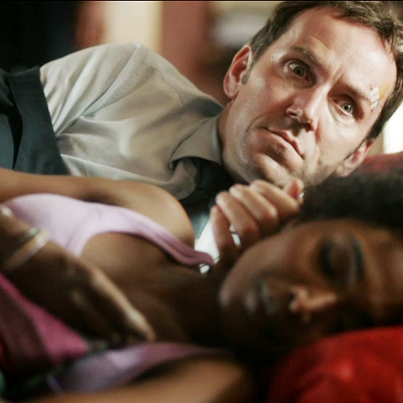
The twist is that DI River (Stellan SkarsgĂ„rd) is talking to a manifestation of his dead partner DS 'Stevie' Stevenson (Nicola Walker) as he attempts to find the person who brutally gunned her down in the middle of the street. From childhood, River has struggled with these manifestations, a recurrent one being the nineteenth-century poisoner Thomas Cream (Eddie Marsan). River is quick to point out to his therapist Rosa Fallows (Georgina Rich) that these aren't ghosts he sees and this is evident in the narrative - Stevie never gives River fresh information that aids the case but we see her reacting to the secrets he uncovers about her life in a way that says more about him than her. It's exquisitely clever and, from the pen of Abi Morgan who also wrote The Hour, I expected nothing less. 

At the heart of River is an eccentric man trying desperately to solve the murder of one of the few people in the world who he ever allowed himself to be close to (though not close enough). It's a love story about closing the chapter with Stevie but it's also about him opening up to other people in his life such as Rosa, DCI Chrissie Read (Lesley Manville) and DS Ira King (Adeel Akhtar). While the twists and turns of the actual murder investigation held my interest, the focus on River himself was far more riveting and the entire cast is phenomenal.

Ultimately, while River startled and unsettled me at times, it also made me smile. The final minutes of the first and last episodes are stunning and I'm not ashamed to say I ended this one in tears. It was one heck of a rollercoaster ride over six weeks and I loved it. 


Friday, 20 November 2015

Interlocking Projects

Since I decided to knock NaNo on the head, I've felt a little more in control. Keeping up with an arbitrary word count wasn't for me at the moment and anybody who seeks to rub their 'success' in my face can honestly save their time. At the end of the day, it's better for me to be editing a project that's captured my heart instead of fighting an imaginary battle. I'm just not in the mood for it.

The truth is, there are three things at the moment that are feeding into one another. It's created something of a fire storm in my head - I'm always thinking of one or other of these things and, fortunately for me, they're proving productive.  

The first of these is the novel fourth draft I'm working on - 'Max'. It's amusing in some respects. When I wrote the first draft I remarked that, 'The least said about this one, the better! I didn't want to write it in the first place but I was...compelled.' Thinking about the second draft, I wrote, 'I know how I want the rewrite of this to pan out but the thought of writing it makes me feel queasy.' I finally got round to writing the second draft late last year, adding a second viewpoint and making the 'antagonist' a little more well-rounded. My goal, as I explained, was to delve into the characters: 'The first draft was an exercise in cleansing my mind; now I know more of the characters and I'm ready to create something a little better.' So the second draft twisted things a little and I ended up with a happy ending. The third draft earlier this year removed some secondary characters and replaced them with others who complemented the overall plot. And, once again, my antagonist got a bit nicer. In this fourth draft, she's not quite wearing a halo but it's not far off. I understand her. I understand why she makes some terrible decisions and why she comes across as completely selfish and the work I've done on my protagonist to explain why she reacts the way she does has helped. All in all, I think I'm really getting somewhere with this one. 

My epic fan fic venture is another thing keeping me occupied. Now, I know people have varied opinions about fan fiction but I've always found it keeps my mind focused on writing and I can tell stories I want to for my own personal amusement. If it also helps me unwind then that's no bad thing. This story I'm telling at the moment, though, is one that I've needed to write for a decade and it's consuming me a little - I haven't done a complete word count lately but I suspect we're over the 400,000 word mark. So much for a hobby! However, I'm enjoying writing it and I'm enjoying reading back over it. For me, that's the most important thing. 

The third thing that's feeding into my mental state at the moment is Once Upon a Time. I won't go into details but, for those of you who haven't watched the show, it's a retelling of certain fairytales that has a pretty important 'friendship' going on between two female characters. I'm drowning in fan fic and gifs - again, a hobby, but one that's aiding my productivity on the novel draft and the fan fic.


You see, there's a good reason these three things are coexisting in my life at the moment. All of them have family at their root. I learned during the second draft of 'Max' that it was the integral theme of the novel and that's only strengthened as time's gone by. In the fan fic, it's emerged as the defining theme and, well, Once Upon a Time is meant to be about family, even if it's not always clear that the writers know what they're doing. The novel draft, the fan fic and Once Upon a Time all have two parents (one not blood-related) and a complex familial relationship at the heart of them. And, perhaps, that's why everything's working so well at the moment.

There's no doubt in my mind that writing this fan fic and getting overly involved in Once Upon a Time is helping my novel draft. Call it a waste of valuable time if you want but I don't believe that - you can't write before you've learned the value and cost of a particular story or theme. Slowly, I'm figuring that out. 

Monday, 30 March 2015

The End of Downton

On Friday it was announced that the sixth series of Downton Abbey will be the last. It'll wrap up with a final episode on Christmas Day, meaning that we've got nine episodes of the award-winning drama left.

I suspect I'm not the only person who's relieved by the news. I love Downton, don't get me wrong, but I think ending on a high is the way to go. If you start losing the core cast of Maggie Smith, Hugh Bonneville, Michelle Dockery etc then the show will change beyond recognition. The departure of Dan Stevens left a gap that, really, hasn't been filled, and finding a suitable mate for Mary is one of those tricky things the final series will have to contend with.

There are numerous little story-lines that fans need resolved and numerous little things they'd like to see. We all have our favourite characters and the problem is that giving them all a suitable send-off is going to be difficult.

Whatever happens, Christmas Day 2015 is going to be memorable for Downton fans.


Monday, 9 March 2015

Yet Another Lesbian Television Tragedy

As I prepared to watch the series finale of Call the Midwife yesterday I already expected something bad to happen to the lesbian couple. A couple of months ago I doubt I would've been so pessimistic, but since then we've had a pregnant lesbian mown down by a car the day after her wedding in Last Tango in Halifax so I've been watching Call the Midwife with a deep sense of foreboding. It turned out to be justified, since Delia Busby was knocked off a bike just as she was preparing to move in with her secret girlfriend Patsy Mount. Delia woke up in hospital with amnesia and is going back to Wales with her mum to recover. Is there something in the guidance for Sunday night BBC television that insists lesbians have to be killed or maimed by the end of a series? It's certainly not a phenomenon contained to the BBC though, or British television. Sure, there are some exceptions but, examined in context, these two storylines are particularly frustrating.

First, a little lesson from my viewing history. One of the first lesbian storylines I became invested in was from the now-defunct British soap Family Affairs in 2002. It followed Kelly's love for her married friend Karen and her willingness to become a surrogate mother for her. Long story short - Karen fell in love with Kelly, they were caught out after the baby was born, they tried to make a go of it and, accidentally, Karen's ex pushed Kelly down the stairs. Lesbian storyline ended in the morgue and Karen reconciled with her ex.


Fast forward to 2015. Any suggestion that Kate's death in Last Tango in Halifax was necessary to propel the narrative and to fix a family rift between Caroline and her mother is a ridiculous defence. It meant that not only did we lose a lesbian (and a black lesbian at that) but the casual homophobia and racism peppered throughout the dialogue was never challenged. At the end of the series, while everyone else celebrated her step-sister's wedding, Caroline sat outside with baby Flora chatting to the ghost of her dead wife while, quite literally, covered in manure.


As for Call the Midwife... Well, I was prepared for this storyline to progress badly. However, the way I expected it to go was completely in-keeping with the challenges of the era: I thought homophobia and the pressures of a secret relationship would get to Patsy and Delia. That would've been sad, yes, but comprehensible. However, a road accident and amnesia feels just like a deliberate attack on the lesbian characters. The heterosexual couples in this series faced difficulties, yes, but they were based on deeper issues than chance: Shelagh and Patrick Turner had a few ups and down regarding their workloads but came through it as a strong couple; Chummy and Peter lived separately for a while to aid the health of their son but were solid throughout; Fred and Violet overcame shyness and family objections to marry by the end of the series; and Trixie and Tom were drawn apart by differing expectations and her drinking. All very human problems but the lesbian couple? Car crash and amnesia. It doesn't fit, does it?


When you watch the end of a series and your one consolation for the lesbian characters is 'at least you're not dead' then you know there's a pretty serious problem of representation, usually reliant on tropes. These shows were written independently of each other so how do you explain two such disasters in two months?

I suppose Call the Midwife could salvage this storyline in the next series. I might be convinced by a continuation where Delia slowly regains her memory and falls in love with Patsy all over again. But is that likely? I don't know. I'll just have to cross everything. In the meantime, the first couple of months of 2015 had been lousy for lesbian representation on popular programmes. Exactly what has changed from 2002?

Tuesday, 10 June 2014

Television Review: Happy Valley

I wanted to write this as soon as I'd seen the finale but time didn't permit. In hindsight, I'm glad I let my thoughts percolate for a little while - I've realised that the series as a whole was better than I thought a week ago. For those unfamiliar with the show, here's the gist. Happy Valley stars Sarah Lancashire as Sgt Catherine Cawood, a woman juggling her job with her dysfunctional home life. Her ex-heroin addict sister Clare (Siobhan Finneran) lives with her, as does grandson Ryan (Rhys Connah). He was the product of rape and his mother killed herself soon after his birth. Catherine's decision to look after Ryan led to the breakdown of her marriage and her relationship with her son. The other story in this is Kevin Weatherill's (Steve Pemberton). Having asked his boss, Nevison Gallagher (George Costigan) for a raise and been rejected, he makes the mistake of suggesting to a drug dealer than they should kidnap Gallagher's daughter and demand a ransom. This all starts to go pear-shaped rather quickly, especially when one of the men involved in the abduction turns out to be Tommy Lee Royce (James Norton), the man who raped Catherine's daughter...

It's difficult to articulate how superb a series this was. Any programme that makes you simultaneously long for the next episode and dread it in equal measure has to be doing something right. Sally Wainwright created a little simmering cauldron through a perfect script, brilliant casting and plain old twists and turns. It proved to be compelling viewing, especially from episode three onwards. The satirical title may have masked the viciousness of what was to come but you weren't in the dark for long.

Sarah Lancashire, rather predictably, was absolutely amazing. I saw plenty of comments surprised at that fact but, really, although the role is drastically different to her portrayal of Caroline in Last Tango in Halifax, that's the place to look for proof of her ability. Equally, the rest of the cast was excellent, even those who only appeared in a few episodes (see Karl Davies's performance in the final episode as Catherine's son for evidence there). For me, though, one of the best performances came from Siobhan Finneran as Clare. Steadfast with an air of fragility, I was getting really concerned about her towards the end of the series, having so much thrown at her.

Happy Valley was said to be too violent and it's certainly not easy viewing. Two episodes in particular will have you closing your eyes. However, it's something to be said that it doesn't trivialise violence. It shows it in all its horrible detail, finally dispelling the myth that people who are beaten badly get straight back up and bounce back. If anything is damaging to society, it's the view that violence doesn't leave physical or emotional scars. I think Happy Valley altered that with some haunting scenes that left me sleepless for nights afterwards.

Best series of the year? Definitely. Good luck to everyone trying to top this.


Tuesday, 25 March 2014

Thoughts on Death in Paradise

Running a little behind on this one but I've only just managed to watch the final episode of series three. As I wrote last year on hearing the news of Ben Miller's departure, I wasn't sure that the show could survive without him. Well, it survived and has been commissioned for a fourth series but is it as good? I'm sorry but nope, not nearly as good.

Let's start with the way they dispatched DI Richard Poole (Miller). It was disrespectful to the fans to treat him like just any other murder victim, not allowing him any closure with Camille (Sara Martins), for instance. While I liked the fact that he solved his own murder from beyond the grave, it was wrapped up far too neatly and he was literally never mentioned again. I know this is light and frothy murder but the death of your superior officer, especially one you were falling for in Camille's case, has to have after-effects. It made the rest of the series seem like an exercise in brainwashing: DI Poole never existed, look - here's Humphrey!


What of DI Humphrey Goodman (Kris Marshall) himself? Well, I suspected the fish-out-of-water scenario would disintegrate and it did. Instead, the hook they hang everything on is Goodman's accident-prone nature. It might've been funny the first few times but it's already a trope - I dread to think how tiresome it'll feel by the end of the next series. When he's not appearing ridiculous, Goodman's not actually too bad a character but he's bland, very bland. It feels like his accidents and his riddles are the only glimmers of personality allowed to him. Oh, apart from the Camille thing...

Perhaps this is the part I most resent. Pushing a romance between Goodman and Camille was stupid but it was evident all series. It disregards Camille's will they/won't they romance with Poole and gives the impression that the writers just had to have a potential couple as their leads. They didn't. A friendship would've worked very well on its own, which is why I actually screamed when Goodman's wife decided not to join him in the first episode. It was being shoehorned into the plot and, quite frankly, it felt stupid. Maybe if they'd given it a few series the relationship would've developed properly. As it is, when Goodman revealed his feelings to Fidel in the final episode I just rolled my eyes.


So, to recap. If you kill off your protagonist, don't pretend as though he never existed afterwards. If you have cultivated a relationship between two characters and one dies, don't pretend he never existed then either. Create characters using more than a few bullet points and do not devalue your fan base by forcing romances to develop. Oh, and as an extra, I know that the thrill of murder mystery shows is working out who did it and how but I figured it out within the first few minutes on three occasions this series - not an incentive to keep watching.

Monday, 17 February 2014

Axed - The Paradise

Learning that The Paradise has been axed, I have to say, I wasn't too surprised. Don't get me wrong, I enjoyed it a lot. I reviewed the first series on here but didn't have time to review the second. The thing is, the second series seemed much less ordered than the first. By the end of it, with Denise (Joanna Vanderham) starting her own business away from the department store, there was a sense of fragmentation. And, also, I'm afraid, of things having progressed a little too quickly with Denise going from shop girl to department head to running her own business with undue haste.

I think the resolution of Miss Audrey's (Sarah Lancashire) storyline in the first two episodes of series two was a real problem for the programme as a whole. However, it was nice to see her ride off into the sunset with Edmund (Peter Wight). Then again, his dithering and returning, obviously giving Denise something of a safety net in her uncle, was a little demeaning to their happily-ever-after. It just accentuated the sense of fragmentation I got throughout the series, along with plots and schemes piled on top of one another. I found the really interesting characters - Clara (Sonya Cassidy), for one - got their screen time but they deserved much more. Equally, I enjoyed Katherine's (Elaine Cassidy) difficult relationship with her new husband and step-daughter but it melted under the conspiracy plot.

When I reviewed the first series it was on a week night and I suggested it was typical Sunday night fare. They did move it for the second series but put it on at 8pm - not exactly what I had in mind. It works for Call the Midwife because that programme has a devoted following but a lot of people watching live just skip over the 8pm slot and tune in later as this household does. Perhaps it was too late to save The Paradise after lacklustre first series figures caused by dodging scheduling. It's a shame but, as I said, not unexpected.

Thursday, 15 August 2013

500th Post: A Selection of Under Appreciated Posts

Amazingly, three years after starting this blog I'm still going and I've hit another milestone. 500 posts seems a lot but, apparently, I can waffle for Britain. In the last few months this blog has become more a portal for classic film reviews than anything else. I'm loving exploring these old films and I hope my readers are finding some gems they haven't encountered before. Peppered in amongst these film reviews are book reviews (although I'm not reading for pleasure these days as much as I would wish), the occasional television review, updates on my personal life and my studies and some random thoughts as and when they occur to me.

Today, I wanted to share 25 posts with you that I wish had been read more. Many stem from the early days of the blog and I hope they provide some entertainment to you.

Five Classic Film Reviews
  1. Victim - A 1961 film about a homosexual barrister (Dirk Bogarde) seeking out a blackmailer. 
  2. Desk Set - A 1957 film where Katharine Hepburn and Spencer Tracy battle over office computerisation. 
  3. Lifeboat - A 1944 Hitchcock film about the survivors of a shipwreck - and the enemy in their midst.
  4. Sister Kenny - A 1946 biopic of a pioneering nurse starring Rosalind Russell.
  5. My Favourite Wife - A 1940 film where Irene Dunne returns from the grave to claim her newly remarried husband, Cary Grant. 


Five Book Reviews
  1. Tell It To The Bees by Fiona Shaw 
  2. Summer Will Show by Sylvia Townsend Warner 
  3. All Passion Spent by Vita Sackville-West
  4. Love in the Time of Cholera by Gabriel Garcia Marquez 
  5. The Scourging Angel by Benedict Gummer 


Fifteen 'Other' Posts
  1. 'Does Your Character Have a Political Agenda?' - In which I discuss my laziness. 
  2. 'Imitating Greats' - In which I discuss Henry Fielding and share a small sample of my MA work.
  3. 'The New Condition of England Novel?' - In which I discuss, shortly after the 2010 election, whether the 'genre' has ever faded. 
  4. 'Fear Itself' - In which I discuss how difficult fear is to portray.
  5. 'The End. Or Alternatively...' - In which I discuss Dickens, Sweet Charity and altered endings. 
  6. 'Be a Curious Clown' - In which I discuss the mysteries of grated cheese amongst other things.
  7. 'A Life in Museum Leaflets' - In which I discuss sorting through the cupboards of my grandparents.
  8. 'Seconds of Serenity' - In which I discuss rolling down a hill in Austria. 
  9. 'Using Profanities - Pure Laziness?' - In which I discuss whether swearing has lost its resonance.
  10. 'Regrets? I've Had a Few...' - In which I discuss my fearful personality. 
  11. 'The Depths of the Library' - In which I discuss a scary visit.
  12. 'Surprising Discoveries in the Early Hours' - In which I discuss finding a present from my late grandfather.
  13. 'Some Victoria Wood Optimism' - In which I discuss my favourite song of hers. 
  14. 'I Said Love - Or Did I?' - In which I discuss the necessity of spelling out emotions in fiction.
  15. 'Some Wise Words - Anne Bronte' - In which I discuss a favourite passage.

Thank you for reading...

Monday, 17 June 2013

Television Review: The Fall

I knew we were in for trouble when I heard that The Fall had been recommissioned for a second series. My fervent hope was that the first series would at least tie up its loose ends and a second series would focus on another case. No such luck. I was left feeling cheated by an ending designed to thwart the audience which also had the misfortune of making one of the protagonists seem the slightest bit dim. Not really appropriate for a character who has gracefully pursued the serial killer up until this point. But let's start with the positive aspects.

The Fall tells the story of a serial killer in Northern Ireland. Detective Superintendent Stella Gibson (Gillian Anderson) has been brought over from the MET to investigate one death but she quickly links another to it and soon another body turns up. Unlike most serial killer dramas, though, the audience knows that Paul Spector (Jamie Dornan) is the killer and we follow him as he stalks his victims whilst still maintaining his job as a bereavement counsellor and being a good husband and father. 

I had no issues with the slow, almost torturous, pace of the main plot. It felt realistic and toyed with the emotions of the audience, particularly in the first episode when we get very involved in the life of lawyer Sarah Kay (Laura Donnelly). Showing Paul's relationship with his wife, Sally Ann (Bronagh Waugh), and his daughter, Olivia (Sarah Beattie), infiltrated us into the life of this serial killer remarkably well. There were many excellent scenes, even a few amusing ones, strange as that sounds. The dialogue was also wonderfully written for the most part, slow and thought-provoking. Up until the final few minutes of the final episode I was content with the way the plot had progressed. 

Something I wasn't as happy with were the superfluous subplots. I realise they were trying to establish a team environment, and throw in some typically Irish problems too, but it detracted rather than added to the overall effect. I honestly didn't care who shot the policeman and why there were foreign prostitutes being beaten up or the fact that another police officer blew his brains out - it had absolutely nothing to do with the main story, which was the reason I was watching, and those loose ends weren't tied up either. Fair enough if they planned another series (though I'm not sure if 'planned' is the correct word given how they almost tied up the main plot then unravelled it rapidly) but, still, they needed to give me a reason to care. Ultimately, there were too many characters floating around in a five-hour drama for me to care about. The core of Gibson, Jim Burns (John Lynch), Danielle Ferrington (Niamh McGrady), Spector and his family and the family of Sarah Kay was enough to keep the viewer's attention. More than that was pushing it and I think it showed. 

However, I thoroughly enjoyed The Fall for the main story and, yes, I probably will watch the second series, even if I'm disappointed with how slow they had to make Gibson in the final minutes to facilitate one. 


Friday, 7 June 2013

Television Review: Case Histories S2

In all honesty, I could've done with a handy recap at the beginning of the first episode of this three-part series. The first series aired in the summer of 2011 (reviewed here) and I was a bit confused about how things ended between Jackson Brodie (Jason Issacs) and police officer Louise Monroe (Amanda Abbington) and it took me quite a while to reacclimatise to their relationship. Instead of three two-hour arcs, this series had three hour-and-a-half episodes. I still can't decide whether this was a good decision or not - occasionally things felt a little packed but, yes, there was still enough brooding shots of Brodie so it probably worked out.

The three individual episodes worked individually and continuity was usually good (though what happened to the dog?!). It'll be no surprise to readers of this blog that my favourite episode turned out to be the first one, guest starring Victoria Wood as an ex-police officer who basically abducts a girl whose mother treats her like rubbish. It's a typical Brodie scenario - he knows that doing the legal thing is not necessarily doing the right thing.

The second episode focuses on Brodie's investigation into a man whose fiancé believes is acting strangely and leads accidentally to a murder investigation. Brodie's daughter, Marlee, also comes to live with him for a little bit, adding a new dimension to both the case he's undertaken and his complex relationships with women.

Finally, the third episode focuses on Brodie's investigation on behalf of the son of a woman who was dragged from the river years ago along with his return to a despised business associate who calls in a favour to find his daughter. The two cases, along with the complexities of his personal life, occasionally made this one a little disjointed and the ending certainly came too soon.

Overall, I enjoyed this series immensely. Good use of the Edinburgh landscape and it wasn't all as grim as the nature of his cases suggests - just watch him trying to deliver a baby. I do wonder, however, where they're planning on going next with Jackson and Louise - while I realise it's impossible for Brodie to be given a happy ending, I think that where they are now closes doors rather than opens them. If another series is made I'll be interested to see how that develops. And, yes, I want another series. Jackson Brodie is the latest in a long line of flawed heroes with inner demons and is arguably one of the best.

Thursday, 30 May 2013

Television Review: Life of Crime

Life of Crime is a three-part drama with the action taking place over three time periods - 1985, when Denise Woods (Hayley Atwell) first joins the force and investigates the death of a teenager; 1997, when the conviction of her killer is thrown into doubt and the present day, when the investigation is finally concluded. I wasn't overawed by this one, though I very much wanted to like it.

For a start, I thought it latched itself unnecessarily onto 'events', namely the Brixton riot of 1985 and the death of Princess Diana. It added artificiality to the plot for me, when showing the passage of time could simply be done via the medium of Denise's family. In addition, I found the direction lacking. It was too slow with far too many extended scenes that simply weren't necessary. I thought that it could've been easily transferred into a two hour drama special instead of being spread over three weeks but, I suppose, that would've toyed with the format they'd set their hearts on. What happened was that the action became diluted and the mix of the family troubles Denise experiences as a result of her headstrong nature failed to capture my attention as they should have.

I have another construction criticism which, again, could have been remedied by it being a more compact drama. By the time the 'reveal' came around I honestly couldn't recall who the killer was for a good few minutes. This was partly caused by a lack of signposts and partly by the fact the third episode recap was fundamentally useless. Finally, I felt let down in the final episode by the fact that Denise spoke to the first victim's mother in quite a touching scene and then there was no more from her - that was one aspect that deserved more exploration and it didn't get it.

I thought that Life of Crime was an interesting concept but, ultimately, it just moved too slow for me to enjoy it and by the time the third episode came around I was ambivalent about the killer. In addition, Denise isn't an easy character to like or even respect. You don't have to like a protagonist in a drama like this but you do at least have to be concerned about what happens to them and, really, I wasn't. A bit of a let-down but, as ever, this was only my opinion. I'm sure other people enjoyed it.


Tuesday, 21 May 2013

Television Review: Murder on the Home Front

Murder on the Home Front follows Molly Cooper (Tamzin Merchant) as she joins pathologist Dr Lennox Collins (Patrick Kennedy) in his investigation of a serial killer in war-torn London. The police think they've got their man but Collins is determined to use forensics to prove them wrong but the chase for the killer soon becomes dangerous for Molly. The cast also includes Emerald Fennell as photographer Issy Quennell, James Fleet as Professor Stephens and Richard Bremmer as mortuary assistant Charlie Maxton.

This is based loosely on the memoirs of Molly Lefebure, which explains where the rather odd concept came from. Molly Cooper is headstrong, amusing and a little bit stubborn but there still seems to be something lacking about the character. Stepping into a real person's shoes has that effect on some actors in this kind of role. I liked Molly but I didn't love her. Dr Collins, however, is likely to become a favourite character of mine. His approach to pathology is very modern in a time that wasn't really ready for it and his clashes with Professor Stephens are a good demonstration of that. I also adore Issy, who seems like much more of a real person than Molly does.

The plot of this was reasonably good and I certainly didn't work out the truth before the protagonists. However, my enjoyment was tempered by the unnecessary CGI and gore that looked frankly juvenile. There was no need to have ridiculous bomb effects in the background every time Collins stood in his flat with his curtains open. They looked unreal and added nothing to the overall story. If they'd spent more time making the close-up shots of bomb effects and damage appear realistic, I would've been a lot happier. Instead of focusing on character and plot, they decided to make it 'look spectacular' and, when you try that hard, you invariably fail. I personally got fair more pleasure from Charlie's occasional comments than the London aerial views that were supposed to make me gape. Equally, the excessive comic-book type gore that was used in certain scenes was irritating. I got the feeling that the series didn't quite know what it wanted to be and who its audience was.

All that said, I think this series has potential. The central characters have a good rapport and the concept is a good one. If they cut out the unnecessary CGI and focus on characters and plot then they could have a hit on their hands. I will certainly watch if they make more episodes.


Wednesday, 8 May 2013

Television Review: The Village

The Village aims to tell the story of a single village throughout the twentieth century. This first series covers on the years 1914-1920 and we focus on the Middleton family - John (John Simm), Grace (Maxine Peake) and their sons, Joe (Nico Mirallegro) and Bert (Bill Jones). Other villagers of importance include the rich Allingham family, vicar's daughter Martha Lane (Charlie Murphy) and schoolteacher Gerard Eyre (Matt Stokoe).

One of main criticisms of this programme is that it is unfailingly grim. In the course of six episodes we had the outbreak of war, shell-shock, alleged desertion, rape by a doctor, suicide, mutilated cows, sick babies, dead children and Spanish flu. Those are only the ones I can remember off the top of my head. However, despite the dreariness, it's difficult to stop watching because it's so brilliantly acted. Maxine Peake has already established herself as one of Britain's most versatile actresses and her performance as Grace merely reiterates that. John Simm is excellent as John, an alcoholic who finds God but is still incredibly difficult to like. Bill Jones deserves praise as young Bert while Nico Mirallegro was heartbreaking in some of his final scenes as Joe. Equally the rest of the cast worked well, especially Juliet Stevenson as Clem Allingham and Augustus Prew as George Allingham.

One aspect of the series irritated me, however. The first five episodes take place over the course of two years but between the fifth and the sixth episode there is a four year jump. This was probably for continuity reasons (they wanted to introduce the next incarnation of Bert before the second series) but it jarred incredibly for me. All the emotion at the end of episode five was left unresolved and, frankly, I think we needed an episode just afterwards to deal with some of that. The cast were certainly up to it so why not? My guess is that apart from the Bert issue they wanted to resolve the war in the first series. Nevertheless, I did get the sensation while watching the sixth episode that I was viewing the first episode of the second series - the viewer was trying to catch-up far too much and scenes which would have been interesting to see (George's successful wooing of Martha, for instance) were ignored. For me, the series lost a little emotional resonance due to this choice.

Will I watch series two? Yes, because I'm invested in a few characters and occasionally there is a scene of absolute brilliance. However, I know several people who have had enough of the bleak atmosphere. I can't say I blame them but this is probably more historically accurate than most programmes set in this era. Finally, it's worth noting that the use of the Peak District scenery is excellent and the score for the series is beautiful. From the opening strains over the first episode I knew I'd carry on watching for the music alone.


Thursday, 2 May 2013

Bomb Girls Cancellation (Spoilers)

Bear with me. I don't usually get militant when shows I love are cancelled but, having watched the Bomb Girls S2 finale, in the knowledge that it may be the last time I see those characters, I bypassed upset and got angry. For those unfamiliar with the show, it tells the story of a group of women in a munitions factory in Toronto during World War II. It concluded its second series this week but last week it was announced that it's been cancelled. They have said there'll be a two-hour television movie next year to wrap up loose ends but, one, fans don't entirely believe them and, two, this deserves another series and not a tie-up movie.


I wrote in my email to Global as soon as I learned about the prospect of cancellation: Bomb Girls has a global appeal. It's a well-written show centred around women, and some very interesting women at that. It's sad that in 2013 this should still feel like a novelty but it does! To encounter four leading characters as different as Betty, Kate, Gladys and Lorna was wonderful for me and all credit to the writing team and the actors for that. I stand by those words. But not only is it a programme about strong women, it's about an important aspect of the war that hasn't been delved into properly. It's gold and that's why fans have come out fighting to save it.


I have to admit, like many fans there is one particular character I'm eager to save: Betty McRae. Like all of them, she is complex and brilliantly acted but her storyline over the two series has undoubtedly appealed to - and probably helped - lots of women all around the globe. Ali Liebert has been outstanding in every scene, but she shone especially in the finale. And all I can think at the moment is that it can't end like that. I mean, they've left Betty languishing in prison covering for the woman she loves. Yes, I predicted such a thing happening but that's only because I know these characters and I love these characters.


I've chuckled with these characters, I've been haunted by them. There's an industrial accident in series one that was one of the most traumatic scenes I've ever watched and I still think about it. Nor did the writers shy away from showing the repercussions of that accident in some of the most touching scenes I've seen on television in years. That's another thing I love about this team - they don't forget a thing because they know the viewer won't. Betty McRae fans found that out the hard way in the finale.


There are suggestions that the television network didn't treat the show right, budging it around the schedules in an effort to lower the ratings. And, some cynics have said, that the reason they have promised a movie is so that no other Canadian network picks the show up. THIS IS THE WRONG WAY TO TREAT YOUR AUDIENCES.


Bomb Girls still has potential. It has an outstanding cast and an outstanding production team. It's been nominated for awards and, as this fan backlash has demonstrated, it is intensely popular where people have heard of it. Below is the petition and some further reading. Signing the petition will only take a moment and there is a precedent in Canada for these type of campaigns working. So, please, donate a minute of your time and you'll have my eternal gratitude. 


Gladys and Lorna quoted Churchill on El Alamein in the final moments of the series finale: "Now this is not the end. It is not even the beginning of the end, but it is, perhaps, the end of the beginning." Every Bomb Girls fan is hoping this proves prophetic. 

Petition

Toronto Standard Article

The Globe and Mail Article

Huffington Post Article 


Tuesday, 16 April 2013

Tea, Tea, Tea

Did anyone else watch Victoria Wood's Nice Cup of Tea over two nights last week? I found it very entertaining, particularly the last fifteen minutes or so when Wood was discussing the future of tea - if it has one. The focus group with young people, and deciding whether Lady Gaga was a good advertising technique, got me thinking about when I first started drinking tea and enjoying it.


The two most formative years of my life were between 16 and 18, while I was at college. That was the time I began writing (it might've been only fan fiction but it certainly helped me with things like plotting, dialogue and characterisation so I'm not arguing), it was the time when my passing appreciation of musical film and theatre grew into a love that would prove to be my favourite way of working through...anything. It was also the time I started drinking tea.

Picture it (I suddenly feel like Sophie Petrillo): I would leave home or college (sometimes not actually bothering to attend when I was meant to be) and walk the few miles to my grandparents house. All I had on me besides the essentials was a battered tiny bag containing the A5 spiral-backed notebooks I accumulated full of fan fiction, a pen and possibly my latest 40s era CD. It was quite a walk over there, the final quarter being uphill, stretching past Pinderfields Hospital. That was the moment when I used to deliberately check there was no one behind me and start singing along to whatever track I was listening to at that moment. Frequently, I made sure it was this one:


When I got to the bungalow my grandmother put the kettle on straight away. If I was lucky my grandfather was away on his mobility scooter watching lawn bowls. The perk of this was that we'd be able to watch Murder, She Wrote in the living room instead of sitting on the floor in the bedroom. If I was early I'd have my first cup of tea in my gorgeous koala mug (still my cup of choice when visiting her) at the kitchen table with my notebook open but as soon as this theme music started I was into the living room like a shot, my grandmother already having put the kettle on for a fresh cuppa (with plenty of biscuits) as we watched Angela Lansbury:


Afterwards I retired to the kitchen, with another cuppa, to write and write and write until the time came for me to leave their bungalow and walk the mile or so to my other grandmother's where most of my evenings ended. The amount of writing I got done in those hours, though, was prolific. And you know the funny thing? I never drank tea anywhere else at this point. Not at home, not at my maternal grandmother's, not out in town. It was my special drink for there, made just right.

I started drinking it again at university to get that home feeling. These days I need a drip installed to manage my intake. Years ago I cut out the sugar but I have it quite weak and with a big dribble of milk. There's also an obsession with fruit and herbal teas but that's a post for another day. In the meantime, say hello to Sophia!


(In this post I managed to talk about Victoria Wood, Murder, She Wrote and The Golden Girls - all things that kept me going through those tricky college years!)

Wednesday, 10 April 2013

Death in Paradise Casting News

I can't be the only one to be disappointed by the announcement that Ben Miller's leaving his role as DI Richard Poole sometime during the third series of Death in Paradise. He'll be replaced by Kris Marshall of My Family fame. While the article doesn't make clear whether the decision to leave was Miller's, I suspect it was from things I've read in the past. However, I can't say with certainty that I'll still watch the show after he leaves.

For starters, what is Kris Marshall's character going to be? If he's a carbon copy of Poole then what's the point? Poole works as a character simply because of Miller. I don't think he would be as amusing in the hands of other actors. And if the new character isn't a carbon copy of Poole then the fish-out-of-water scenario disintegrates completely. There may be a middle ground in there somewhere but I'm struggling to see it.


Another irritating aspect of this decision is the fact that the slow-burning love story between Poole and DS Camille Bordey (Sara Martins) hasn't been resolved and now, if it is, it'll only be as a precursor to Miller's leaving. I feel a bit cheated actually - as a viewer I wanted the pay-off of awkward romance. This is television, not film. You don't have to end with the 'happy' ending, you should run with it sometimes.


I would've preferred that if Miller wanted to leave them to end the show completely instead. As things stand, this announcement makes it sound like they're clinging onto something that got a hefty chunk of the viewing figures but disregarding a couple of the vital components that got it those figures. I'm not saying the gorgeous location and escapism didn't add to the appeal, but the hackneyed Agatha Christie style of detection wouldn't have worked for anyone but Miller.


I'll probably watch up until Miller leaves then cross it off my list. I may, of course, be proven wrong.

Monday, 8 April 2013

A Somewhat Odd Appreciation Post - Nicola Walker

You know how it is - suddenly everything an actor has filmed in the last months hits the screen at the same time. We've had David Bradley in both Broadchurch and Prisoners Wives for the last few weeks and Olivia Colman, currently in Broadchurch, will also be appearing in the new episode of The Suspicions of Mr Whicher, which has been heavily trailed. But I think Nicola Walker deserves her own accolade for appearing in three different programmes over three nights last week. That was quite impressive.

To be honest, since I never watched Spooks the first time she really appeared on my radar was late last year in Last Tango in Halifax (I never wrote a blog post about that and it really really deserved one). But suddenly it seems everything I watch (and I actually watch little television) has her in it. Unfortunately, last week was the culmination of two of her programmes but that was a delightful week while it lasted and showed her versatility over three nights.


On Tuesday she was in Heading Out as Justine, the nice-but-very-dim friend of Sue Perkins's protagonist in the new sitcom. I really hope that gets renewed (but, again, that's for another post). As Justine, she made eating custard a fascinating experience, though this episode wasn't my favourite. On Thursday she was in Prisoners Wives as DCI Fontaine, a rather smug police officer trying to imprison one of the main characters. However, I saved her Wednesday appearance in Scott & Bailey for last because...well, wow.

She played Helen Bartlett, a woman strangely unruffled by the news of her estranged mother's murder to the point where she becomes a viable suspect. As the episode goes on the disturbing details of her relationship with her parents trickles out in an extended scene that is as gut-wrenching as it is captivating. Probably has to be seen to be appreciated but, damn, it was good.


So airhead to murder suspect to DCI in the space of three days - and all of them believable in their own different ways. If I hadn't already been converted to her fan club in December I would definitely be signing up now. Looking forward to the rest of the series of Scott & Bailey and I'll then be counting down the days till Last Tango returns.

Friday, 15 March 2013

Television Review: Shetland

Based on a book by Ann Cleeves, Shetland follows DI Jimmy Perez (Douglas Henshall) and his team as they investigate a murder on one of the islands. The murder is tricky - the victim is an elderly woman who was lured outside and shot but the team can't ascribe a motive at first. She had nothing to steal and no one could really have wanted her dead. The answer may be in the past and the results of an archaeological dig on her land could prove pivotal.

I've read mixed reviews about this, mainly from locals disgruntled at accent representation and light patterns etc. All important in the representation of the islands, I admit, but they didn't hinder the actual drama elements. It's a slow burn drama, that's for sure. The plot itself is intricate but, while I thought I knew 'who' from fairly early on, the 'why' was slower to emerge. I liked the resolution and I liked the way the pace picked up in the last twenty minutes or so, as it needed to.

The landscape is arguably the main character and the gloomy, windswept hills compliment the murder mystery quite nicely. Equally, the music wasn't intrusive and added to, rather than masking, the drama. This is also the role that Douglas Henshall was made for - the dour Scot with a sense of humour and emotion hidden underneath the surface. His personal situation - he lives with his step-daughter, Cassie (Erin Armstrong), while her real father, Duncan Hunter (Mark Bonnar) lives nearby - is interesting and also contrasts the main narrative of family differences by showing a situation that does work well. Of Perez's colleagues, Alision O'Donnell as DC Alison 'Tosh' MacIntosh stands out the most. Young but pretty bright, her interactions with Perez gave the drama a few much-needed humorous touches.

This has certainly been set up for future episodes and I hope it gets them. While I had a couple of script niggles, I think it worked well as a mystery drama which blends into the environment rather than just being pushed on top of it. Accent and pronunciation gripes from locals aside, I think this was a great advert for Shetland and, hopefully, more episodes in future will add to that.


Wednesday, 27 February 2013

Television Review: Dancing on the Edge

Dancing on the Edge, written and directed by Steven Poliakoff, tells the story of a black jazz band trying to break through in 1930s London with the help of some aristocratic and rich friends. It boasts a splendid cast including Chiwetel Ejiofor as bandleader Louis Lester, Matthew Goode as his journalistic 'discoverer' Stanley, John Goodman as rich eccentric Mr Masterson, Anthony Head as Mr Donaldson and Janet Montgomery as Louis's love interest Sarah. It also has an excellent supporting cast including Jenna-Louise Coleman, Wunmi Mosaku, Mel Smith, Jacqueline Bisset, Sam Hoare and Caroline Quentin. However, for all the excellent names in the cast list, this failed on several points for me.

First, let's start with the positive aspects. The production was sumptuous, the colour and decadence of the Imperial Hotel, where the band first makes a splash, contrasts wonderfully with the organised squalor of Stanley's office and other locations associated with the band before their big break. Visually, Dancing on the Edge is nothing short of beautiful. Alongside the locations there are some gorgeous clothes on view and the series does a relatively good job of bringing 1930s London to life. In addition, there are some excellent characters in this piece, whose intentions you're never quite sure of over the five episodes. Most of these are handled well but a few feel incomplete.

The central problem of this series is a murder which Louis Lester finds himself involved in. He has to work out who his friends are while searching for the truth. However, the viewer is pretty much in on the secret - if you've been paying attention - and the question is always 'how' will it come to a head rather than 'who' or 'why'. This dilutes some tension. Equally, the change in singer Jessie Taylor's (Angel Coulby) from star to diva has no depth to it and rather undermines the scenes that follow it. Much more believable is her back-up singer Carla (Mosaku) who is forced to the fore and copes with it admirably.

There were other issues too. Lady Cremone's (Bisset) arc felt strangely unfulfilled and, as one of the more intriguing characters, I was disappointed by that. The romance between Stanley and Pamela (Joanna Vanderham) seemed artificial and I couldn't buy into it, though they were good characters separately. I was more on board with Louis and Sarah's relationship, though I don't think the racial aspects of that were explored half as much as they could have been, considering the era. That, too, was left on a note that didn't exactly reward the viewer for their commitment. It wasn't the type of ending I had a problem with, but their final few scenes together. Perhaps one of my main gripes, though, was the band itself: I don't think their loyalty to Louis, so integral to the finale, was demonstrated at all sufficiently. Yes, Louis was the leader but the rest of the band were woefully left out of most proceedings. This missed both the opportunity to show their relationship to Louis but, also, to show the band's rise from the perspective of someone a little lower down the food chain. They became almost obsolete through the middle episodes and that was sad in my opinion.

Ultimately, I don't think the ending rewarded viewers for their perseverance. It flicked too quickly from the climax to the aftermath. I would've liked the see the reactions of certain characters as they heard the full story but, instead, it was just shown on the pages of a magazine. We don't even know how much of the story came out, an insult to viewers if ever there was one. Dancing on the Edge was artistically beautiful, yes, but I think it sacrificed a lot in character and plot to get there. However, this wasn't the case for all characters: Chiwetel Ejiofor and Matthew Goode were given the opportunity to shine and took it. They, for me, were most certainly the highlights of this series.


Sunday, 13 January 2013

Lip Service Axed

Despite my open criticisms of Lip Service series two (see here and here) I'm disappointed to learn that it hasn't been renewed for a third series by BBC3. As I've mentioned previously, the second series became too fragmented for my liking, getting rid of three major characters in the space of two episodes and diluting the group aspect of the show. It could've been the stories that prompted the axe or it could've been the shift from Tuesday nights for S1 to Friday nights for S2. So far creator and executive producer Harriet Braun says she hasn't been given a proper reason by the BBC. However, I would say that if you muck around with things too much (I mean both the content and the time slot) then you have to be prepared for failure.

Still, I'm sad about the cancellation and there's one main reason for that - the character of Tess (Fiona Button). Unlucky in love, bit catastrophe-prone and extremely adorable, she became my reason for watching series two. How about a spin off - the incredible adventures of Tess on tour? Start in Scotland then buzz around the country. With all those audiences she would definitely find a woman...wouldn't she? It's something to think about.

Ultimately, whatever the justification for the cancellation, it's going to be a loss. I would've liked to have seen it return to the glory of the first series but, really, I'm not sure if that was possible. I don't suppose it's anyone's fault when actors need to leave to pursue their careers but I can't help thinking that swift exits were what set Lip Service down this road. Bye, bye, Tess. I'll miss you.