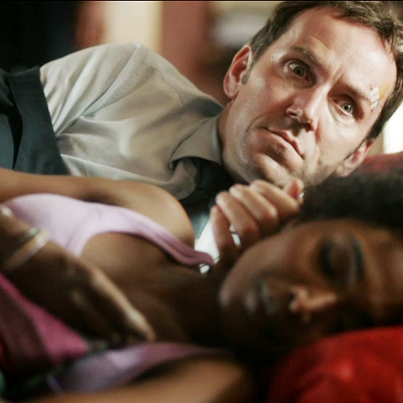
The sequel to Funny Girl (1968), Funny Lady continues the story of Fanny Brice (Barbra Streisand) and depicts her relationship with showman Billy Rose (James Caan) following her divorce from Nicky Arnstein (Omar Sharif). During the Depression she struggles to find work but she and Rose work together, reigniting her career and teaching him a few things in the process. The film also stars Roddy McDowall as Bobby Moore.
Given how wonderful Funny Girl is, this sequel was always going to struggle. However, for me, it does a good job in many respects. Streisand's portrayal of Brice as someone matured by her experiences with Arnstein is compelling, as are the scenes where she accepts that she still loves him. Perhaps the best scene of the film comes when Brice is ruminating on her relationship with Rose while singing 'Isn't This Better?' As an acceptance that a marriage/friendship that works is more useful than a passionate love, it's a poignant moment. I also enjoyed the big numbers, especially 'Let's Hear it For Me' and 'How Lucky Can You Get'. Like the original film, Funny Lady switches gear between comedy and tragedy rapidly, and manages to pull it off.
James Caan as Billy Rose works very well. His interactions with Streisand before their marriage are brilliant and snippy, especially when he believes he knows best. For example, the catastrophic opening night which has scenery crashing everywhere and Brice trapped in her dressing room is comedic gold. The chemistry works in that it has to be one-sided - Rose adores her but Brice is still in love with Arnstein. It was also good that Sharif returned to hover in the background of this film. He was a link to the first film along with the brief appearances by their daughter, and I like that sort of grounding. Actually, I was a little disappointed that Brice's mother didn't make a small appearance since she was a memorable part of Funny Girl.
Ultimately, this is a bittersweet love story that showcases Streisand's talents and, as far as sequels go, it's a pretty good one.
Contact me at lucyvictoriabrown@gmail.com because I'm always up for a natter about anything. Well, mostly.
Showing posts with label love. Show all posts
Tuesday, 12 May 2015
Monday, 23 February 2015
Emotion Overload
The novel rewrite I'm working on at the moment is a tricky one. Of course, I didn't realise it was a tricky one until I got about 10,000 words into it. That was about the moment when I understood the mood I was going to have to get into it in order to make this story work properly. It needed resonance, emotional power. I've got through six drafts with this one but I knew there was something missing. It could be that I just didn't want to go to the place it took me to, but now I don't have much of a choice. Because, after all, if something is this painful to write then some good must be coming out of it, one way or another.
One of the central themes of this novel is rejection, which works on several levels. It's a dual timeline narrative and to say my protagonist is damaged in the front story would be an understatement. However, it took this draft for me to realise how damaged she is in the back story too. I suppose this is what happens when you spend five years with a character - it's a slow process of revealing the layers and reaching the core. The fact that I finished the first draft of this novel in June 2010 is scary, but it's one of those I'm determined to work on until I'm happy with it. As with all my novel drafts, even if I don't get them published, I want something that I'm eager to read every now and then.
As ever, I took refuge in music to work out what's going on with my protagonist. There are a couple of songs that fit where I'm heading with this story and how she reaches the end she does. One of those is 'Reason to Believe', my favourite version of which is by the wonderful Bobby Darin.
The other song, unsurprisingly, comes from one of my favourite musical scores, with music and lyrics by Jerry Herman. It's one of the most gut-wrenching songs I've ever heard and Bernadette Peters makes you feel every spasm of pain. In the end, the conclusion my protagonist comes to is that, once anger fades, the emotion it was concealing still remains. Because time heals everything except...
I'd better get back to work. If I don't finish this rewrite soon I'm going to be a wreck.
One of the central themes of this novel is rejection, which works on several levels. It's a dual timeline narrative and to say my protagonist is damaged in the front story would be an understatement. However, it took this draft for me to realise how damaged she is in the back story too. I suppose this is what happens when you spend five years with a character - it's a slow process of revealing the layers and reaching the core. The fact that I finished the first draft of this novel in June 2010 is scary, but it's one of those I'm determined to work on until I'm happy with it. As with all my novel drafts, even if I don't get them published, I want something that I'm eager to read every now and then.
As ever, I took refuge in music to work out what's going on with my protagonist. There are a couple of songs that fit where I'm heading with this story and how she reaches the end she does. One of those is 'Reason to Believe', my favourite version of which is by the wonderful Bobby Darin.
"If I gave you time to change my mind,
I'd find a way and I'd leave the past behind,
Knowing that you lied straight-faced while I cried,
Still I'd look to find a reason to believe..."
The other song, unsurprisingly, comes from one of my favourite musical scores, with music and lyrics by Jerry Herman. It's one of the most gut-wrenching songs I've ever heard and Bernadette Peters makes you feel every spasm of pain. In the end, the conclusion my protagonist comes to is that, once anger fades, the emotion it was concealing still remains. Because time heals everything except...
I'd better get back to work. If I don't finish this rewrite soon I'm going to be a wreck.
Tuesday, 23 September 2014
Classic Film Review: Guess Who's Coming to Dinner (1967)
Guess Who's Coming to Dinner stars Spencer Tracy and Katharine Hepburn as Matt and Christina Drayton. Their daughter Joey (Katharine Houghton) returns home from holiday unexpectedly and has a surprise for her parents - she's engaged. The fly in the ointment is that her fiancée, Dr John Prentice (Sidney Poitier) is black. Joey's liberal parents have their views tested by this relationship and when Mr and Mrs Prentice (Roy Glenn and Beah Richards) arrive to join them for dinner the bonds of both families are tested. Rounding out the cast is Isabel Sandford as Tillie the maid and Cecil Kellaway as Monsignor Ryan.
As Spencer Tracy's last film, Guess Who's Coming to Dinner holds a special allure for classic film fans. Certainly, I was as much interested in the power surrounding it as I was the film itself. Given that Tracy was seriously ill during filming and died only seventeen days after it was over, you'd imagine that allowances would have to be made for his illness. He doesn't look well, certainly, but in terms of his acting, he remained on top form. The final lengthy scene where Matt makes a speech to his guests about love is intensely moving. For many, of course, this scene is tied up with the Tracy and Hepburn myth and there is no hiding Hepburn's emotion in the final scene. It feels as though we're witnessing a private occasion. As a final exercise in his own quiet and beautiful style of acting, this film does Tracy proud.
And what of the rest of it? Well, the chemistry between Katharine Hepburn and her real-life niece Katharine Houghton makes their scenes a pleasure, though Houghton is not as compelling away from Hepburn. Some of her scenes with Poitier feel like fillers but that's possibly because the crux of the plot is not their relationship so much as the reaction to their relationship. Poitier's best scenes are John's heartfelt declaration to Matt and Christina about his love for their daughter (watch Hepburn in this scene too!) and his argument with his father much later. An unsung brilliant scene, too, is that between Christina and Mrs Prentice in the garden. However, my favourite moment also comes courtesy of Hepburn as she sacks a colleague and tells her to be on her merry way for criticising her daughter's relationship. I don't often clap in the middle of the film but I did then.
Ultimately, Guess Who's Coming to Dinner reflects attitudes of the time. It can seem dated now but that can only be a good thing. It's a film with some brilliant moments and a decent heart and, as Tracy's final screen appearance, it can't help but be captivating. I felt as emotionally wrought as Katharine Hepburn when the credits had finally rolled.
As Spencer Tracy's last film, Guess Who's Coming to Dinner holds a special allure for classic film fans. Certainly, I was as much interested in the power surrounding it as I was the film itself. Given that Tracy was seriously ill during filming and died only seventeen days after it was over, you'd imagine that allowances would have to be made for his illness. He doesn't look well, certainly, but in terms of his acting, he remained on top form. The final lengthy scene where Matt makes a speech to his guests about love is intensely moving. For many, of course, this scene is tied up with the Tracy and Hepburn myth and there is no hiding Hepburn's emotion in the final scene. It feels as though we're witnessing a private occasion. As a final exercise in his own quiet and beautiful style of acting, this film does Tracy proud.
And what of the rest of it? Well, the chemistry between Katharine Hepburn and her real-life niece Katharine Houghton makes their scenes a pleasure, though Houghton is not as compelling away from Hepburn. Some of her scenes with Poitier feel like fillers but that's possibly because the crux of the plot is not their relationship so much as the reaction to their relationship. Poitier's best scenes are John's heartfelt declaration to Matt and Christina about his love for their daughter (watch Hepburn in this scene too!) and his argument with his father much later. An unsung brilliant scene, too, is that between Christina and Mrs Prentice in the garden. However, my favourite moment also comes courtesy of Hepburn as she sacks a colleague and tells her to be on her merry way for criticising her daughter's relationship. I don't often clap in the middle of the film but I did then.
Ultimately, Guess Who's Coming to Dinner reflects attitudes of the time. It can seem dated now but that can only be a good thing. It's a film with some brilliant moments and a decent heart and, as Tracy's final screen appearance, it can't help but be captivating. I felt as emotionally wrought as Katharine Hepburn when the credits had finally rolled.
Monday, 8 September 2014
Taking Stock
Apologies for the radio silence. It's been a tough few weeks. Actually, everything since my birthday at the end of July has been a mini-nightmare, all conspiring to make this one gigantic monster that's inclined to chase me down the street with fangs bared. I'm holding him off for now but I can't say it's easy.
The less said about the thesis at the moment, the better. I just have to hope the problems I'm having with that (not completely of my own making this time) will iron themselves out. As a side note, I hate Edmund Yates and Wilkie Collins with every fibre of my being. I'd be happy never to see a passing reference to them ever again, though I'm told that feeling fades...eventually.
So - the writing. There's still some good news in the bag that I can't share with you yet but, beyond that, I'm really pulling my finger out. Last week, I took the time to focus on my writing and made a little progress. As I intended to do back in May, I've done a little planning ahead so that one novel ('Max') is ready to be second-drafted. I also cheated a little on my resolution not to do any 'proper' writing and made a concerted effort to finish the second draft of 'Lauren'. We're nearly there with only two and a half chapters left to write and it's hovering around the 60,000 mark at the moment. I've changed a lot about this (added five viewpoints for a start) and it's very rough but getting there, plot-wise. Everything needs tightening etc but that's a job for draft three.
My plans after I've finished that may change. Currently, what I want to do is work on the sixth draft of 'Lily'. That will require concentration, focus on every word, and may not sit comfortably alongside my thesis edits which, at this point, require the same thing. Not to worry - I've got several short stories to write and rework and I'm working on a play rewrite, which I need to submit to somewhere specific by the end of the month. I haven't got much out at submission currently but that's going to change.
To say I'm using my writing as a distraction wouldn't be far off the mark. August was atrocious, punctuated by problems with the boiler that still aren't resolved, a re-emergence of my anxiety issues and some rather more serious problems. My grandmother was diagnosed with bowel cancer. Even when they're 91 it's something you don't want to hear and the doc isn't planning on telling her because of her dementia problems. I've got mixed feelings on that one but my dad and aunt are the ones with the rights over her, not me. As well as that bombshell, I broke up (very amicably, as it happened) with my partner of nearly nine years and there have also been other things going on I can't really discuss on a public forum like this. However, what it all boils down to is a great shift in how I define myself. I've got to change my mindset and fight some long-ingrained habits. Learning to be yourself without other people around to bounce things off can be tricky but, hey, it's not as though I have a choice right now.
I've learned a couple of things in the last month. The first is that I have a renewed confidence in my writing abilities and I really need to hold on to that. The second is that honesty is truly the best policy. It might've made me ill, it might've caused a minor earthquake in my little world, but I feel a bit better for it. Not that I can keep a grip on that perspective constantly. Just have to roll with it for a while, I guess. Finally, the third thing I learned is that I can be strong. As I tweeted last week, I've essentially taken a blowtorch to half my life over the last month. Maybe it was stupid but once I'd struck the match, it was out of my control. And, in all seriousness, the fact that it is all out of my control now is vaguely reassuring. I did the right things for once, the brave things, and the fact that it didn't quite work out is not down to me. I have many things to reproach myself about in the past but, this time, I think I behaved fairly well.
So I'll just continue to roll with the punches. As I've been typing this, a man arrived with no warning to paint our windowsills and the saga of the boiler continues on Wednesday. I may be lonely at the moment, very lonely, but as long as I have my characters around I suppose I'll get through it. Betty Hutton can also help...
The less said about the thesis at the moment, the better. I just have to hope the problems I'm having with that (not completely of my own making this time) will iron themselves out. As a side note, I hate Edmund Yates and Wilkie Collins with every fibre of my being. I'd be happy never to see a passing reference to them ever again, though I'm told that feeling fades...eventually.
So - the writing. There's still some good news in the bag that I can't share with you yet but, beyond that, I'm really pulling my finger out. Last week, I took the time to focus on my writing and made a little progress. As I intended to do back in May, I've done a little planning ahead so that one novel ('Max') is ready to be second-drafted. I also cheated a little on my resolution not to do any 'proper' writing and made a concerted effort to finish the second draft of 'Lauren'. We're nearly there with only two and a half chapters left to write and it's hovering around the 60,000 mark at the moment. I've changed a lot about this (added five viewpoints for a start) and it's very rough but getting there, plot-wise. Everything needs tightening etc but that's a job for draft three.
My plans after I've finished that may change. Currently, what I want to do is work on the sixth draft of 'Lily'. That will require concentration, focus on every word, and may not sit comfortably alongside my thesis edits which, at this point, require the same thing. Not to worry - I've got several short stories to write and rework and I'm working on a play rewrite, which I need to submit to somewhere specific by the end of the month. I haven't got much out at submission currently but that's going to change.
To say I'm using my writing as a distraction wouldn't be far off the mark. August was atrocious, punctuated by problems with the boiler that still aren't resolved, a re-emergence of my anxiety issues and some rather more serious problems. My grandmother was diagnosed with bowel cancer. Even when they're 91 it's something you don't want to hear and the doc isn't planning on telling her because of her dementia problems. I've got mixed feelings on that one but my dad and aunt are the ones with the rights over her, not me. As well as that bombshell, I broke up (very amicably, as it happened) with my partner of nearly nine years and there have also been other things going on I can't really discuss on a public forum like this. However, what it all boils down to is a great shift in how I define myself. I've got to change my mindset and fight some long-ingrained habits. Learning to be yourself without other people around to bounce things off can be tricky but, hey, it's not as though I have a choice right now.
I've learned a couple of things in the last month. The first is that I have a renewed confidence in my writing abilities and I really need to hold on to that. The second is that honesty is truly the best policy. It might've made me ill, it might've caused a minor earthquake in my little world, but I feel a bit better for it. Not that I can keep a grip on that perspective constantly. Just have to roll with it for a while, I guess. Finally, the third thing I learned is that I can be strong. As I tweeted last week, I've essentially taken a blowtorch to half my life over the last month. Maybe it was stupid but once I'd struck the match, it was out of my control. And, in all seriousness, the fact that it is all out of my control now is vaguely reassuring. I did the right things for once, the brave things, and the fact that it didn't quite work out is not down to me. I have many things to reproach myself about in the past but, this time, I think I behaved fairly well.
So I'll just continue to roll with the punches. As I've been typing this, a man arrived with no warning to paint our windowsills and the saga of the boiler continues on Wednesday. I may be lonely at the moment, very lonely, but as long as I have my characters around I suppose I'll get through it. Betty Hutton can also help...
Monday, 4 August 2014
Classic Film Review: Letter from an Unknown Woman (1948)
Letter from an Unknown Woman stars Louis Jourdan as Stefan Brand, a former concert pianist who travels home one night having been challenged to a duel. He intends to leave town to avoid it but a letter has been delivered that captures his attention. It's from Lisa Berndle (Joan Fontaine) and begins with the proclamation that she may be dead by the time he reads it. She had fallen in love with him at first sight many years earlier and much of the film is comprised of flashbacks to show how their relationship developed and how it came to be that the intimate letter was from an 'unknown woman'.
I've heard it said that this film is Joan Fontaine's finest and I'm happy to concur. She is outstanding, as much of a presence here as she was in Rebecca eight years earlier (reviewed here). It was impossible for me to look away from her face in any given scene, though sometimes I wanted to due to the strength of emotion she was portraying. A couple of scenes stand out in this regard. The scene where she flees her mother and stepfather and returns to see Stefan is heartbreaking, as is the scene later in the film where she realises that he doesn't remember her at all. Fontaine's ability to convey so much in one look is what makes her one of my favourite actresses and this film showcases that tremendously.
Jourdan is well-cast as Stefan, particularly in the present-day scenes as he struggles with what he's reading. He portrays his charming selfishness perfectly until it eventually cracks under his realisation. The rest of the cast is good but mostly in the background. This film belongs to Fontaine and Jourdan - and more Fontaine than Jourdan. However, a word must be given to the exquisite direction, especially in the scenes where Lisa is watching Stefan. These scenes are works of art and the film as a whole is put together so lovingly.
I can't think of a bad thing to say about Letter from an Unknown Woman. It left me feeling as though my heart had been ripped out but the ending did the story justice. I think perhaps this is Fontaine's finest film, but I'll have to continue my journey through her filmography to confirm that.
I've heard it said that this film is Joan Fontaine's finest and I'm happy to concur. She is outstanding, as much of a presence here as she was in Rebecca eight years earlier (reviewed here). It was impossible for me to look away from her face in any given scene, though sometimes I wanted to due to the strength of emotion she was portraying. A couple of scenes stand out in this regard. The scene where she flees her mother and stepfather and returns to see Stefan is heartbreaking, as is the scene later in the film where she realises that he doesn't remember her at all. Fontaine's ability to convey so much in one look is what makes her one of my favourite actresses and this film showcases that tremendously.
Jourdan is well-cast as Stefan, particularly in the present-day scenes as he struggles with what he's reading. He portrays his charming selfishness perfectly until it eventually cracks under his realisation. The rest of the cast is good but mostly in the background. This film belongs to Fontaine and Jourdan - and more Fontaine than Jourdan. However, a word must be given to the exquisite direction, especially in the scenes where Lisa is watching Stefan. These scenes are works of art and the film as a whole is put together so lovingly.
I can't think of a bad thing to say about Letter from an Unknown Woman. It left me feeling as though my heart had been ripped out but the ending did the story justice. I think perhaps this is Fontaine's finest film, but I'll have to continue my journey through her filmography to confirm that.
Tuesday, 10 September 2013
Book Review: Till Human Voices Wake Us by Patti Davis
Till Human Voices Wake Us is essentially an intimate novel about grief and finding ways to endure it. Isabelle Berendon loses her son in the opening pages when he drowns in their swimming pool. The narrative flashes forward to reveal that within a few months she's fallen in love with, and moved in with, her sister-in-law, Iris. The rest of the book deals with the events following Nathan's death and the future after she has moved in with Iris and taken her step-daughter, Margaret, with her, including the emergence of another grief lying in wait around the corner.
I can't say I enjoyed this book, but that wasn't really the point. This is a brutally honest novel that examines parental grief in a minute way. It's also about finding the love to help you through such a situation, although the gender of the person Isabelle finds solace in is incidental. As such, it can seem to take a back seat. That was one of the few things that disappointed me about the novel - I didn't think it explained the relationship alteration between Isabelle and Iris in as much detail as it possibly have.
That's not to say that it wasn't an absorbing read. It's written in a very lucid style, plunging into the past whenever necessary. It demonstrates how grief impedes on even the easiest activities and how your present is directly influenced by your past. Apart from her relationships with her husband, dead son and stepdaughter, we also learn about her criminal father and the effect that had on her mother. The flashbacks are always impeccably handled, though some of them were too curtailed for my liking.
Till Human Voices Wake Us is not a fast-moving book. The plot is very simple and the narrative voice is strong throughout. There is, however, a mystery that pulls at you from the opening pages and the resolution genuinely surprised me. The other characters perhaps aren't as strong as Isabelle but this is her story and it doesn't pretend to be anything else.
Overall, an exceptional examination of grief and love. Some slight niggles but, ultimately, a very heartfelt novel.
I can't say I enjoyed this book, but that wasn't really the point. This is a brutally honest novel that examines parental grief in a minute way. It's also about finding the love to help you through such a situation, although the gender of the person Isabelle finds solace in is incidental. As such, it can seem to take a back seat. That was one of the few things that disappointed me about the novel - I didn't think it explained the relationship alteration between Isabelle and Iris in as much detail as it possibly have.
That's not to say that it wasn't an absorbing read. It's written in a very lucid style, plunging into the past whenever necessary. It demonstrates how grief impedes on even the easiest activities and how your present is directly influenced by your past. Apart from her relationships with her husband, dead son and stepdaughter, we also learn about her criminal father and the effect that had on her mother. The flashbacks are always impeccably handled, though some of them were too curtailed for my liking.
Till Human Voices Wake Us is not a fast-moving book. The plot is very simple and the narrative voice is strong throughout. There is, however, a mystery that pulls at you from the opening pages and the resolution genuinely surprised me. The other characters perhaps aren't as strong as Isabelle but this is her story and it doesn't pretend to be anything else.
Overall, an exceptional examination of grief and love. Some slight niggles but, ultimately, a very heartfelt novel.
Tuesday, 6 August 2013
Classic Film Review: The Big Street (1942)
The Big Street tells the story of Little Pinks (Henry Fonda), a busboy who falls in love with singer Gloria Lyons (Lucille Ball). When she's injured in an argument with her boyfriend and benefactor Case Abels (Barton MacLane) he takes care of her, paying her hospital fees and having her stay with him until she's better. The trouble is, Gloria is ungrateful and mean - she has her sights set on a rich playboy Decatur Reed (William T. Orr) and she'll have Little Pinks push her in her wheelchair from New York to Florida to get her way. The supporting case includes Agnes Moorehead as Little Pinks' friend Violette and Eugene Pallette as Nicely Nicely Johnson.
Based on a Damon Runyon story, this is a reasonably good film. It manages to bring to life the gambling and hustling of New York whilst still showing the hearts of those involved - there is a splendid scene where a group is pitching in money to help Pinks get Gloria to Florida, even though they don't like her and she's treated them like dirt. In this film, Gloria is the unreasonable one, pushing and pushing Pinks until he can't take it any more.
Lucille Ball, however, is excellent in the role. There are a few over-dramatic moments, particularly during the argument with Abels, but her moments of weakness as she struggles to acknowledge her injury, make up for this. She's a difficult character to like but it is a performance you can respect. With Henry Fonda, its the other way round: he's an altogether good character, easy to like but too liable to allow himself to be walked over. His defining moments come in the final minutes, which make up for his weaknesses as a character earlier. In addition, Agnes Moorehead is brilliant throughout, becoming a sounding board for Little Pinks but also enjoying a whirlwind romance with Eugene Pallette as Nicely Nicely.
All in all, this is an interesting little film that avoids the simpering ending I anticipated. Some of the dialogue is difficult to swallow but, on the whole, this is a bit of a lost diamond.
Based on a Damon Runyon story, this is a reasonably good film. It manages to bring to life the gambling and hustling of New York whilst still showing the hearts of those involved - there is a splendid scene where a group is pitching in money to help Pinks get Gloria to Florida, even though they don't like her and she's treated them like dirt. In this film, Gloria is the unreasonable one, pushing and pushing Pinks until he can't take it any more.
Lucille Ball, however, is excellent in the role. There are a few over-dramatic moments, particularly during the argument with Abels, but her moments of weakness as she struggles to acknowledge her injury, make up for this. She's a difficult character to like but it is a performance you can respect. With Henry Fonda, its the other way round: he's an altogether good character, easy to like but too liable to allow himself to be walked over. His defining moments come in the final minutes, which make up for his weaknesses as a character earlier. In addition, Agnes Moorehead is brilliant throughout, becoming a sounding board for Little Pinks but also enjoying a whirlwind romance with Eugene Pallette as Nicely Nicely.
All in all, this is an interesting little film that avoids the simpering ending I anticipated. Some of the dialogue is difficult to swallow but, on the whole, this is a bit of a lost diamond.
Thursday, 25 July 2013
Classic Film Review: Love Affair (1939)
Love Affair tells the story of playboy Michel Marnet (Charles Boyer) and Terry McKay (Irene Dunne) who meet on a ship and fall in love. Michel wants to prove he can earn a living as a painter so they arrange to meet again in six months if they both feel the same. However, a tragic turn of events stops the meeting from happening.
This is essentially a film of two halves. The first half, set on the ship, is the story of two people trying valiantly not to fall in love because they don't want to hurt their respective partners. When the ship stops in Madeira, Michel visits his grandmother (Maria Ouspenskaya) and Terry goes along with him. This little group of scenes are perhaps the best in the film, including a scene in the chapel which is beautifully shot and creates a wonderful image which is referred to later.
The second half of the film is something of a painful love story. It alters very suddenly and from then on it's difficult to watch and, really, I wanted to throttle Terry for being so stubborn about the whole thing. However, the final scene between her and Michel more than makes up for the frustration preceding it. The dialogue between the two is more complex and more evocative than it has been throughout the whole film - and that's saying something. Boyer and Dunne play this final scene to perfection and I freely admit to shedding a tear.
On the whole, this is an excellent film with the main roles not overplayed by the two leads. It's a sensitive, clever piece that gets slightly sentimental in the second half when a group of orphans take centre stage but, for the most part, it remains a delicate film that is true to its characters.
This is essentially a film of two halves. The first half, set on the ship, is the story of two people trying valiantly not to fall in love because they don't want to hurt their respective partners. When the ship stops in Madeira, Michel visits his grandmother (Maria Ouspenskaya) and Terry goes along with him. This little group of scenes are perhaps the best in the film, including a scene in the chapel which is beautifully shot and creates a wonderful image which is referred to later.
The second half of the film is something of a painful love story. It alters very suddenly and from then on it's difficult to watch and, really, I wanted to throttle Terry for being so stubborn about the whole thing. However, the final scene between her and Michel more than makes up for the frustration preceding it. The dialogue between the two is more complex and more evocative than it has been throughout the whole film - and that's saying something. Boyer and Dunne play this final scene to perfection and I freely admit to shedding a tear.
On the whole, this is an excellent film with the main roles not overplayed by the two leads. It's a sensitive, clever piece that gets slightly sentimental in the second half when a group of orphans take centre stage but, for the most part, it remains a delicate film that is true to its characters.
Friday, 19 July 2013
Classic Film Review: Christopher Strong (1933)
Christopher Strong tells the story of a happily-married politician who falls in love with a famous flier, jeopardising his marriage and the happiness of all those around him. The title character is played by Colin Clive while Katharine Hepburn is Lady Cynthia Darrington, the woman who catches his eye in one of her earliest films. Lady Strong is played by Billie Burke while their daughter, Monica, is played by Helen Chandler. Rounding out the main cast is Ralph Forbes as Monica's married boyfriend Harry.
Perhaps the most difficult aspect of this film for me was understanding what Lady Cynthia saw in Sir Christopher Strong. His attraction to her is understandable but there is little about her feelings until later in the film. Arguably, Lady Cynthia is the most important character and deserves to be the title character. She is a record-breaking aviator who is very good at what she does. While Strong is a successful politician, yes, she seems above him in all senses of the word.
The supporting cast is good, especially Billie Burke. Intriguingly enough, the film doesn't dwell on the potential ramifications of Lady Strong finding out about the affair. She finds out fairly rapidly and her quiet reaction is heartbreaking to watch, along with a subsequent scene where she finds her husband listening desperately for news of Lady Cynthia's latest flight on the radio. Burke doesn't overplay these scenes when it would be very easy to do so and she shines all the better for it.
Unfortunately, parts of the dialogue melt into over-the-top declarations of feelings. Thankfully, these don't ruin the entire film but they do spoil parts of it. The best scenes for me are not the Hepburn/Clive ones but the ones where other people - Lady Strong, Monica - are involved.
The ending, though perhaps predictable, is well worth sticking around for. The montage scene of memories that Lady Cynthia dwells on during a flight is fairly innovative and effective for 1933. As one of Katharine Hepburn's early films, it signals the promise of what's to come and, if you ignore certain aspects, it's a very good analysis of infidelity, propriety and society. It also contains an attempt at a bedroom scene between the lovers - nobody is seen but the intention is very evident. Again, not bad for 1933.
Perhaps the most difficult aspect of this film for me was understanding what Lady Cynthia saw in Sir Christopher Strong. His attraction to her is understandable but there is little about her feelings until later in the film. Arguably, Lady Cynthia is the most important character and deserves to be the title character. She is a record-breaking aviator who is very good at what she does. While Strong is a successful politician, yes, she seems above him in all senses of the word.
The supporting cast is good, especially Billie Burke. Intriguingly enough, the film doesn't dwell on the potential ramifications of Lady Strong finding out about the affair. She finds out fairly rapidly and her quiet reaction is heartbreaking to watch, along with a subsequent scene where she finds her husband listening desperately for news of Lady Cynthia's latest flight on the radio. Burke doesn't overplay these scenes when it would be very easy to do so and she shines all the better for it.
Unfortunately, parts of the dialogue melt into over-the-top declarations of feelings. Thankfully, these don't ruin the entire film but they do spoil parts of it. The best scenes for me are not the Hepburn/Clive ones but the ones where other people - Lady Strong, Monica - are involved.
The ending, though perhaps predictable, is well worth sticking around for. The montage scene of memories that Lady Cynthia dwells on during a flight is fairly innovative and effective for 1933. As one of Katharine Hepburn's early films, it signals the promise of what's to come and, if you ignore certain aspects, it's a very good analysis of infidelity, propriety and society. It also contains an attempt at a bedroom scene between the lovers - nobody is seen but the intention is very evident. Again, not bad for 1933.
Monday, 1 July 2013
Some Wise Words - Anne Bronte
As I was reading Agnes Grey last week (review will arrive, I've currently got a bit of a backlog), aside from thoroughly enjoying the book I kept stumbling across pearls of wisdom. One stuck out as something that I want to always bear in mind when constructing emotion and, particularly, thwarted love in my writing. This passage comes just after the heroine has had a pleasant encounter with the object of her affections:
'But our wishes are like tinder: the flint and steel of circumstances are continually striking out sparks, which vanish immediately, unless they chance to fall upon the tinder of our wishes; then, they instantly ignite, and the flame of hope is kindled in a moment.'
I love the extended metaphor and I love the sentiment. I reread the passage about eight times to absorb it fully and I'm almost relieved that it caught my eye. It's something that seems so obvious yet, as a basic concept of humanity, it's something a lot of writers gloss over in their bid to 'just write'.
Seems I'm building up a bit of a knowledge base when it comes to showing affection on the page. Remember, I'm not allowed to say 'love' either...
'But our wishes are like tinder: the flint and steel of circumstances are continually striking out sparks, which vanish immediately, unless they chance to fall upon the tinder of our wishes; then, they instantly ignite, and the flame of hope is kindled in a moment.'
I love the extended metaphor and I love the sentiment. I reread the passage about eight times to absorb it fully and I'm almost relieved that it caught my eye. It's something that seems so obvious yet, as a basic concept of humanity, it's something a lot of writers gloss over in their bid to 'just write'.
Seems I'm building up a bit of a knowledge base when it comes to showing affection on the page. Remember, I'm not allowed to say 'love' either...
Wednesday, 10 April 2013
Death in Paradise Casting News
I can't be the only one to be disappointed by the announcement that Ben Miller's leaving his role as DI Richard Poole sometime during the third series of Death in Paradise. He'll be replaced by Kris Marshall of My Family fame. While the article doesn't make clear whether the decision to leave was Miller's, I suspect it was from things I've read in the past. However, I can't say with certainty that I'll still watch the show after he leaves.
For starters, what is Kris Marshall's character going to be? If he's a carbon copy of Poole then what's the point? Poole works as a character simply because of Miller. I don't think he would be as amusing in the hands of other actors. And if the new character isn't a carbon copy of Poole then the fish-out-of-water scenario disintegrates completely. There may be a middle ground in there somewhere but I'm struggling to see it.
Another irritating aspect of this decision is the fact that the slow-burning love story between Poole and DS Camille Bordey (Sara Martins) hasn't been resolved and now, if it is, it'll only be as a precursor to Miller's leaving. I feel a bit cheated actually - as a viewer I wanted the pay-off of awkward romance. This is television, not film. You don't have to end with the 'happy' ending, you should run with it sometimes.
I would've preferred that if Miller wanted to leave them to end the show completely instead. As things stand, this announcement makes it sound like they're clinging onto something that got a hefty chunk of the viewing figures but disregarding a couple of the vital components that got it those figures. I'm not saying the gorgeous location and escapism didn't add to the appeal, but the hackneyed Agatha Christie style of detection wouldn't have worked for anyone but Miller.
I'll probably watch up until Miller leaves then cross it off my list. I may, of course, be proven wrong.
For starters, what is Kris Marshall's character going to be? If he's a carbon copy of Poole then what's the point? Poole works as a character simply because of Miller. I don't think he would be as amusing in the hands of other actors. And if the new character isn't a carbon copy of Poole then the fish-out-of-water scenario disintegrates completely. There may be a middle ground in there somewhere but I'm struggling to see it.
Another irritating aspect of this decision is the fact that the slow-burning love story between Poole and DS Camille Bordey (Sara Martins) hasn't been resolved and now, if it is, it'll only be as a precursor to Miller's leaving. I feel a bit cheated actually - as a viewer I wanted the pay-off of awkward romance. This is television, not film. You don't have to end with the 'happy' ending, you should run with it sometimes.
I would've preferred that if Miller wanted to leave them to end the show completely instead. As things stand, this announcement makes it sound like they're clinging onto something that got a hefty chunk of the viewing figures but disregarding a couple of the vital components that got it those figures. I'm not saying the gorgeous location and escapism didn't add to the appeal, but the hackneyed Agatha Christie style of detection wouldn't have worked for anyone but Miller.
I'll probably watch up until Miller leaves then cross it off my list. I may, of course, be proven wrong.
Wednesday, 3 April 2013
Book Review: Far From The Madding Crowd by Thomas Hardy
This was my third foray into Hardy's fiction following Tess of the d'Urbervilles (read for A-Levels) and The Mayor of Casterbridge (review here). Far from the Madding Crowd tells the story of Gabriel Oak, a shepherd, and the young woman he admires, Bathsheba Everdene. While at the beginning of the novel Oak is fairly prosperous and Bathsheba forced to live with her aunt, in a reversal typical of Hardy, Oak soon finds himself reduced in status and ends up working for Bathsheba who has inherited her uncle's farm in Weatherby. He still carries a torch for her but recognises she's far above him and uninterested. They become friends and, meanwhile, another farmer, Boldwood, falls deeply in love with Bathsheba. As she's contemplating her answer to his proposal, she encounters a dashing soldier, Sergeant Troy, who she's immediately attracted to. Troy has previously been involved with one of Bathsheba's maids who fled the town but only Boldwood and Oak know this.
I have to say, Hardy's descriptions of nature (and man against nature) are almost unsurpassed. There are a few scenes of particular merit which linger in my mind. Firstly, the scene where Oak stops to help when he sees a fire in the distance and, ultimately, proves his merit to all around. Secondly, the thunderstorm where Oak and Bathsheba battle to save the crops is remarkably written. Evocative and subtle, developing the relationship between the two alongside the more urgent task. Finally, the moment where a grave is almost washed away is beautiful, although I won't say more about that in case I ruin the plot for anyone. However, while I enjoyed much of Hardy's descriptions of place and activity throughout the novel, I must admit that the random conversations between Bathsheba's farm hands became a little tedious. Probably designed for a little light relief, some of them provided it but some meandered off in odd directions and never quite make it back. The moment Oak gets irritated with them for their digressions mirrored how I'd been feeling throughout the book!
Although I read the first half of this one slowly, I whizzed through the second half. A combination of unexpected character developments pushed me onto the end. I will say, though, that once these developments take place, there is only one real possibility for the final pages. Still, knowing that didn't make me enjoy the book less.
Gabriel Oak is an excellent character. Whilst loyal, he also has pride and a stubborn streak to match Bathsheba's. His quiet devotion to her throughout the novel, alongside all the wonderful descriptions, is probably why I enjoyed this one as much as I did.
Although I read the first half of this one slowly, I whizzed through the second half. A combination of unexpected character developments pushed me onto the end. I will say, though, that once these developments take place, there is only one real possibility for the final pages. Still, knowing that didn't make me enjoy the book less.
Gabriel Oak is an excellent character. Whilst loyal, he also has pride and a stubborn streak to match Bathsheba's. His quiet devotion to her throughout the novel, alongside all the wonderful descriptions, is probably why I enjoyed this one as much as I did.
Tuesday, 5 March 2013
Book Review: May 1812 by M.M. Bennetts
May 1812 is essentially a romance set during one of the most unsettling months in the early nineteenth century. The Earl of Myddelton discovers that he has to fulfil his part in a marriage arranged by his late father or he will lose his fortune. The girl he is meant to marry is Jane Heron, a young woman of better education and breeding than he had anticipated. They marry as required but their efforts to get to know each other properly are hindered, not least by the assassination of the prime minister, Sir Spencer Perceval. As Myddelton finds himself even more immersed in work, rumours and scandal threaten to destroy his fledging marriage before it's begun.
This is an excellent novel, deftly weaving fact and fiction together. Against the backdrop of the Napoleonic war and Perceval's assassination, Bennetts creates a compelling romance that frequently had me groaning at yet another mix-up. Myddelton works at the Foreign Office and so is in the thick of the action; this doesn't bode well for his marriage. Jane herself is a pragmatic girl but coping with her new situation proves difficult at times, especially when a love rival decides to cause problems.
There are some stand-out moments in this book. Early in the novel when the Myddeltons visit Vauxhall Gardens the scene is evoked wonderfully. Equally, the scene of Perceval's murder is gently depicted, along with Myddelton's reactions to it later through the eyes of his wife. I also enjoyed the descriptions later of Myddelton's little adventure. Some of the supporting characters were difficult to keep track of but this may have been a memory problem on my part. In addition, I struggled with the omniscient narrator, but I feel that's also a personal preference. It certainly suited this type of novel and allowed the reader to be steps ahead of the characters. Towards the end that became vital!
The level of detail in this book is astounding but it doesn't make itself known. The 'info dumps' are only really there when necessary; the rest of the historical context comes across naturally within the narrative. From a bizarre premise of an arranged marriage from beyond the grave, May 1812 becomes a romance novel you truly want to have a happy ending. The pace irritated me at times but only ever because I was on the side of the characters - that's a fine way to be irritated I think. Excellent book, recommended for any fans of historical fiction in general and Regency fiction particularly. The mentions of the Prince Regent and Beau Brummell are amusing for a start!
This is an excellent novel, deftly weaving fact and fiction together. Against the backdrop of the Napoleonic war and Perceval's assassination, Bennetts creates a compelling romance that frequently had me groaning at yet another mix-up. Myddelton works at the Foreign Office and so is in the thick of the action; this doesn't bode well for his marriage. Jane herself is a pragmatic girl but coping with her new situation proves difficult at times, especially when a love rival decides to cause problems.
There are some stand-out moments in this book. Early in the novel when the Myddeltons visit Vauxhall Gardens the scene is evoked wonderfully. Equally, the scene of Perceval's murder is gently depicted, along with Myddelton's reactions to it later through the eyes of his wife. I also enjoyed the descriptions later of Myddelton's little adventure. Some of the supporting characters were difficult to keep track of but this may have been a memory problem on my part. In addition, I struggled with the omniscient narrator, but I feel that's also a personal preference. It certainly suited this type of novel and allowed the reader to be steps ahead of the characters. Towards the end that became vital!
The level of detail in this book is astounding but it doesn't make itself known. The 'info dumps' are only really there when necessary; the rest of the historical context comes across naturally within the narrative. From a bizarre premise of an arranged marriage from beyond the grave, May 1812 becomes a romance novel you truly want to have a happy ending. The pace irritated me at times but only ever because I was on the side of the characters - that's a fine way to be irritated I think. Excellent book, recommended for any fans of historical fiction in general and Regency fiction particularly. The mentions of the Prince Regent and Beau Brummell are amusing for a start!
Thursday, 7 February 2013
I Said Love - Or Did I?
There's a wonderful little song in Robert and Elizabeth called 'I Said Love' which, as the title suggests, is Robert Browning affirming his feelings to Elizabeth Barrett via the helpful medium of song. It's a gorgeous little number, here are some of the lyrics:
"I said love, and I mean love
Let's be clear from the start
Something very strange has happened
Happened here, in my heart
Friendship can be quite delightful
Having friends is very nice
But my dear friend I must warn you
Merely friendship won't suffice..."
Good in it's way - and I do adore it - but perhaps a little too on-topic. I've been thinking a lot lately about how my characters admit they love each other. Most of the time it feels too contrived, as though the words have to be so irritatingly bland just to get it over with. Centuries of literature, music and film have rather dulled the meaning somewhat. So I'm trying to persuade my characters to say it without saying it. Donald O'Connor offers a good example of what I mean in Call Me Madam as he woos a princess played by Vera-Ellen:
The last few seconds and Donald's 'I'll shut up, your highness' make me giggle every time. But this is less about my love for the great dancer and more about my lack of love for...love. That scene's a perfect example of how to say it without actually saying it. Of course, this is Hollywood and the words are spoken later but do they have to be?
I feel like my characters roll their eyes at me when I force such hackneyed words into their mouths. Something that is massively helpful in 'showing' love is The Emotion Thesaurus, a wonderful little book that's all about conveying character emotions in realistic ways. The 'love' entry is very interesting, particularly the 'cues of suppressed love' - my characters utilise those quite often! It's proof that emotions are better off bubbling beneath the surface than being articulated every other scene.
Now I just need to remember that. When I want to say love I should say something else. Maybe if I do need to spell it out then it isn't love in the first place...
Although, sometimes, you do need to be told. I mean, sometimes you're just completely oblivious and Ethel Merman needs to give you a nudge:
"You don't need analysing
It is not so surprising
That you feel very strange but nice
Your heart goes pitter-patter
I know just what's the matter
Because I've been there once or twice
Put your head on my shoulder
You need someone who's older
A rubdown with a velvet glove
There is nothing you can take
To relieve that pleasant ache
You're not sick
You're just in love."
Friday, 16 November 2012
Story: Mr Guppy's Wedding Day
A while ago I entered a competition to celebrate the bicentenary of Charles Dickens. The brief was to write a short story or poem inspired by the great man and his work. Although my entry was unsuccessful, I thought I'd share it with you in honour of Dickens's 200th birthday (and a few months!). I took Bleak House as my starting point and the somewhat hilarious character of Mr Guppy. Enjoy...
***
Mr William Guppy sat perfectly still, listening for footsteps outside his chamber whilst simultaneously praying none would be heard. He drew his pocket watch to compare the time with the old unreliable clock propped up beside the door. One false move, he always thought, and the contraption would come crashing to the floor. In a fire, perhaps, it would disintegrate completely and block his passage of escape. He’d be left to perish in his bed, no more to love and be loved. For Mr William Guppy was loved, as miraculous as the fact may appear to the world and indeed himself.
It had been four years since his admittance to the roll of attorneys, four years since he took possession of that wonderful little house in Lambeth – six rooms, exclusive of kitchens. He had hoped at the time... Well, he had hoped and his hopes were dashed once more and that was that. He took possession of the house at Lambeth with his mother and Tony Jobling in attendance and had lived a quiet life forthwith.
Then, quite unexpectedly so it felt to him at the time, his mother was no longer with them.
He noticed her absence at the breakfast table that morning with irritation. He had an important engagement that evening which he wished to inform her of so that she wouldn’t raise the alarm around the neighbourhood when he failed to return home on time. It had happened more than once, gaining him something of an unsavoury reputation in the neighbourhood. He resented the inference that he was his mother’s son, even if he undoubtedly was.
After breakfasting alone, he proceeded to his mother’s room. It was the dankest, darkest portion of the house, thus ascribed to her because she failed to desire anything better. In recent months it had become rather fragrant too, due to her reluctance to allow the servants access. The only visitor permitted was Mr William Guppy himself and, as a consequence, he possessed the second key. He used it this morning, dismissing the coldness that settled around the region of his neck as nothing more than a draught from the unstable roof over this part of the house. He must really speak to someone about that.
The room was still. Mr Guppy returned the key to his pocket and gazed around the room, expecting to see his mother in her accustomed moth-eaten armchair beside the window. But the curtains were drawn and the chair was empty. The light that filtered through from the sunlit corridor illuminated what Mr Guppy could only describe as a lump in the bed. A lump emitting a faint odour and a lump with an arm hanging from it.
He had waited quietly with the corpse until the undertaker arrived. His hands fixed in his lap, he tried to acknowledge the fact of the deceased. After all, it was difficult to comprehend the loss of someone who had wholeheartedly believed in him. Although her mental faculties were much diminished in recent years, she still recalled the fact she believed in him.
‘I don’t care for anyone who doesn’t care for my William,’ she would say a dozen times a day. He tired of hearing it – but only occasionally.
‘Yes, Mother,’ he would respond with a courteous smile. The smile had become strained in recent years as business faltered and times grew grimmer but, just as she believed in him, he believed in the power of her words. What else did he have to believe in at any rate?
And now she was gone from him. It was difficult, that he would concede. Yes, that he would concede to anyone who cared to know.
A pale face appeared around the door frame, anxious and extremely welcome in the gloom. ‘Mr Guppy, I just had to come the moment I heard.’
It was the daughter of a lesser client of his, a merchant who obstinately believed he was always right. Good for Mr Guppy, bad for him. But what was his name? Mr Guppy couldn’t grasp it in his present state.
‘It’s Sarah Nutworthy, Mr Guppy,’ she said, stepping further into the room. ‘Mr Nutworthy’s daughter, sir, of Nutworthy’s Shipping.’
‘Of course,’ he answered with an attempt at a smile ‘Permit me a moment of weak memory, Miss Nutworthy, please forgive me.’
‘But I wouldn’t expect less,’ Miss Nutworthy returned, entering the room fully. Apart from her pale face she brought with her a demure blue dress – of the pale variety – and a handful of letters. She held these out to Mr Guppy. ‘Mr Jobling asked me to deliver these. He thinks some of them may be important.’
Mr Guppy looked but hadn’t the stomach to handle them.
‘My sentiments exactly,’ said Miss Nutworthy, tossing them onto the bedside table, beside the corpse now covered with a sheet. ‘There is little business important at a time of tragedy.’
Raising his eyes to her, Mr Guppy asked, ‘Do you really think so, Miss Nutworthy?’
‘But of course. My mother – God rest her soul – almost put a halt to my father’s company at the time of her death.’
‘Ah, I’d forgotten your father was a widower,’ he said.
‘He remarried, sir,’ she replied.
‘Perhaps that explains my forgetfulness, eh, Sarah?’ he answered before recognising his impudence. ‘I mean Miss Nutworthy, naturally. Permit me a moment of impropriety if you would.’
‘I would permit you as much as you desire, Mr Guppy, sir,’ she said, bowing her head as a blush appeared on her pale cheeks. It was the most illuminated he’d ever recalled seeing her – and in the presence of a corpse as well. His eyes flickered back to his mother, but only briefly.
‘Would you really, Miss Nutworthy?’ he asked.
‘But of course.’
Once more his gaze rested on his mother’s blue arm dangling from under the sheet – he hadn’t trusted himself to touch it – and then he looked back to his guest. He was on his feet within a moment, swaying only slightly with delayed shock.
‘Permit me, Miss Nutworthy, to offer you some tea if I may. I am being a truly terrible host.’
This time she only nodded, taking his arm as they left the room.
‘How is it,’ he questioned as they descended the staircase, ‘that you come to visit me alone?’
‘But I don’t,’ she answered with a sweet smile. ‘My father will take tea with us.’
From that moment forth, Mr Guppy had found himself swept towards marriage. He proposed himself, of course, but only after repeated hints from the intimidating Mr Nutworthy. It was impractical, his prospective father-in-law said, to expect a girl still of attractive age to be escorted around the park with a man who did not intend to marry her. Mr Guppy, to whom these occasional walks had become a beacon of solace, wholeheartedly agreed. As a consequence, he found himself engaged to be married.
After that it had all moved rather swiftly. He could barely recall a time when he wasn’t engaged to be married to Miss Sarah Nutworthy. His days – when not taken up with business matters – were spent with Mr Nutworthy and his wife discussing the finer points of married life. It occurred to Mr Guppy once or twice that the present Mrs Nutworthy was hardly a model wife but as there was no blood relation between herself and Sarah he had hopes of Sarah becoming a wonderful spouse.
Mrs Nutworthy’s relish to dispose of her stepdaughter was evident to all who cared to notice it. Mr Guppy noticed it but thought it impudent to discuss his potential mother-in-law with anyone at all. He had never imagined there was so much to getting married. But today was the end of one passage of his life. A death had led into marriage but Mr Guppy still couldn’t fathom how it had happened so quickly.
The dreaded footsteps outside his chamber arrived. He expected the knock to be hard and fast but it was soft, dainty even. A nettle settled in the pit of his stomach.
‘Come in, Mr Jobling,’ he called, though he knew it was not he.
In entered Mrs Nutworthy, as young and spritely as her husband was old and curmudgeonous. Beneath the fluttering eyelashes there rested a woman as sharp as the day was long. He knew it and she knew that he knew it, yet the pretence between the two of them continued.
Mr Guppy rose to greet her. ‘My dear Mrs Nutworthy, what’s wrong?’
‘Why should something be wrong?’ she asked.
He checked his pocket watch again. ‘I would’ve thought you’d be helping Sarah with her...her preparations.
I suppose there are preparations?’
She chuckled mirthlessly. ‘There are, Mr Guppy, there are. But I’m afraid Sarah’s not making them.’
As his heart leapt, he managed to look perplexed. ‘Can I enquire why not?’
‘What do you know of a woman’s heart, Mr Guppy?’
‘Astoundingly little, madam,’ he replied.
‘Do you know there are women who feign love to one while harbouring designs on another?’ she persisted.
‘I have heard of such creatures.’
‘Sarah is one of them,’ Mrs Nutworthy said with a sad flourish of her hand. ‘I admit that I was perhaps too eager for her to marry you, Mr Guppy. You seem a trustworthy gentleman, not as handsome as one would like but you do have to take what you can find when a girl gets to Sarah’s age.’
He stretched his lips into a smile. ‘Quite.’
‘This morning, however, I discovered her exceptionally upset. When I coaxed the truth out of her, it seems she’s in love – I use the term loosely – with a draper’s boy from Peckham.’
‘Is that so?’ he asked with semi-interest.
‘It is, Mr Guppy.’
‘I see.’
Mrs Nutworthy left a decent pause before adding, ‘I do apologise for the expense of the wedding and the household alterations. You have mine and Mr Nutworthy’s sincerest regard.’
‘Where is the kind gentleman?’ he questioned, mainly because he thought he should.
‘Comforting his daughter I don’t doubt.’ A spasm of discomfort shot across the woman’s face, quickly hidden by her hand. ‘I shan’t keep you further,’ she went on. ‘I am only sorry the marriage could not be brought about.’
‘It is my deepest regret that it could not be,’ he said with as much sincerity as he could muster.
He escorted her to the door, intent on seeing the last Nutworthy out of his home once and for all. Alas, on the threshold was another member of that family – the kind Mr Nutworthy himself. He was flushed, obviously out of breath, and carrying a note in the hand unoccupied by his umbrella.
‘Mr Guppy, sir, ignore my wife. That’s it, old chap, look at me, not at her. Whatever she has told you, I find it within my power to retract.’
‘Retract, sir?’ His very heart was hurting now.
‘Retract indeed! I’ve had it out with Sarah, all this draper’s boy nonsense. It’s an infatuation, not like the bond you share. At length she agreed. The marriage will go ahead and all this silly bickering can be put down to wedding nerves, eh?’
Mr Guppy attempted to exchange a look of horror with the dear Mrs Nutworthy. Unfortunately, that lady’s features were contorted with delight.
‘The marriage goes ahead!’ she exclaimed.
‘Indeed it does, with all the arrangement just as before.’ Mr Nutworthy tapped Mr Guppy on the shoulder with his umbrella. ‘Do you know what she said, old chap?’
Mr Guppy looked up, unable to remember where or who he was. ‘Said, sir?’
‘When I said she’d marry you, Guppy, she said, ‘but of course’ as if it were never in doubt.’
‘Never in doubt, sir,’ Mr Guppy repeated. ‘I’d wager not.’
Read my review of Bleak House here.
***
Mr Guppy’s Wedding Day
Mr William Guppy sat perfectly still, listening for footsteps outside his chamber whilst simultaneously praying none would be heard. He drew his pocket watch to compare the time with the old unreliable clock propped up beside the door. One false move, he always thought, and the contraption would come crashing to the floor. In a fire, perhaps, it would disintegrate completely and block his passage of escape. He’d be left to perish in his bed, no more to love and be loved. For Mr William Guppy was loved, as miraculous as the fact may appear to the world and indeed himself.
It had been four years since his admittance to the roll of attorneys, four years since he took possession of that wonderful little house in Lambeth – six rooms, exclusive of kitchens. He had hoped at the time... Well, he had hoped and his hopes were dashed once more and that was that. He took possession of the house at Lambeth with his mother and Tony Jobling in attendance and had lived a quiet life forthwith.
Then, quite unexpectedly so it felt to him at the time, his mother was no longer with them.
He noticed her absence at the breakfast table that morning with irritation. He had an important engagement that evening which he wished to inform her of so that she wouldn’t raise the alarm around the neighbourhood when he failed to return home on time. It had happened more than once, gaining him something of an unsavoury reputation in the neighbourhood. He resented the inference that he was his mother’s son, even if he undoubtedly was.
After breakfasting alone, he proceeded to his mother’s room. It was the dankest, darkest portion of the house, thus ascribed to her because she failed to desire anything better. In recent months it had become rather fragrant too, due to her reluctance to allow the servants access. The only visitor permitted was Mr William Guppy himself and, as a consequence, he possessed the second key. He used it this morning, dismissing the coldness that settled around the region of his neck as nothing more than a draught from the unstable roof over this part of the house. He must really speak to someone about that.
The room was still. Mr Guppy returned the key to his pocket and gazed around the room, expecting to see his mother in her accustomed moth-eaten armchair beside the window. But the curtains were drawn and the chair was empty. The light that filtered through from the sunlit corridor illuminated what Mr Guppy could only describe as a lump in the bed. A lump emitting a faint odour and a lump with an arm hanging from it.
He had waited quietly with the corpse until the undertaker arrived. His hands fixed in his lap, he tried to acknowledge the fact of the deceased. After all, it was difficult to comprehend the loss of someone who had wholeheartedly believed in him. Although her mental faculties were much diminished in recent years, she still recalled the fact she believed in him.
‘I don’t care for anyone who doesn’t care for my William,’ she would say a dozen times a day. He tired of hearing it – but only occasionally.
‘Yes, Mother,’ he would respond with a courteous smile. The smile had become strained in recent years as business faltered and times grew grimmer but, just as she believed in him, he believed in the power of her words. What else did he have to believe in at any rate?
And now she was gone from him. It was difficult, that he would concede. Yes, that he would concede to anyone who cared to know.
A pale face appeared around the door frame, anxious and extremely welcome in the gloom. ‘Mr Guppy, I just had to come the moment I heard.’
It was the daughter of a lesser client of his, a merchant who obstinately believed he was always right. Good for Mr Guppy, bad for him. But what was his name? Mr Guppy couldn’t grasp it in his present state.
‘It’s Sarah Nutworthy, Mr Guppy,’ she said, stepping further into the room. ‘Mr Nutworthy’s daughter, sir, of Nutworthy’s Shipping.’
‘Of course,’ he answered with an attempt at a smile ‘Permit me a moment of weak memory, Miss Nutworthy, please forgive me.’
‘But I wouldn’t expect less,’ Miss Nutworthy returned, entering the room fully. Apart from her pale face she brought with her a demure blue dress – of the pale variety – and a handful of letters. She held these out to Mr Guppy. ‘Mr Jobling asked me to deliver these. He thinks some of them may be important.’
Mr Guppy looked but hadn’t the stomach to handle them.
‘My sentiments exactly,’ said Miss Nutworthy, tossing them onto the bedside table, beside the corpse now covered with a sheet. ‘There is little business important at a time of tragedy.’
Raising his eyes to her, Mr Guppy asked, ‘Do you really think so, Miss Nutworthy?’
‘But of course. My mother – God rest her soul – almost put a halt to my father’s company at the time of her death.’
‘Ah, I’d forgotten your father was a widower,’ he said.
‘He remarried, sir,’ she replied.
‘Perhaps that explains my forgetfulness, eh, Sarah?’ he answered before recognising his impudence. ‘I mean Miss Nutworthy, naturally. Permit me a moment of impropriety if you would.’
‘I would permit you as much as you desire, Mr Guppy, sir,’ she said, bowing her head as a blush appeared on her pale cheeks. It was the most illuminated he’d ever recalled seeing her – and in the presence of a corpse as well. His eyes flickered back to his mother, but only briefly.
‘Would you really, Miss Nutworthy?’ he asked.
‘But of course.’
Once more his gaze rested on his mother’s blue arm dangling from under the sheet – he hadn’t trusted himself to touch it – and then he looked back to his guest. He was on his feet within a moment, swaying only slightly with delayed shock.
‘Permit me, Miss Nutworthy, to offer you some tea if I may. I am being a truly terrible host.’
This time she only nodded, taking his arm as they left the room.
‘How is it,’ he questioned as they descended the staircase, ‘that you come to visit me alone?’
‘But I don’t,’ she answered with a sweet smile. ‘My father will take tea with us.’
From that moment forth, Mr Guppy had found himself swept towards marriage. He proposed himself, of course, but only after repeated hints from the intimidating Mr Nutworthy. It was impractical, his prospective father-in-law said, to expect a girl still of attractive age to be escorted around the park with a man who did not intend to marry her. Mr Guppy, to whom these occasional walks had become a beacon of solace, wholeheartedly agreed. As a consequence, he found himself engaged to be married.
After that it had all moved rather swiftly. He could barely recall a time when he wasn’t engaged to be married to Miss Sarah Nutworthy. His days – when not taken up with business matters – were spent with Mr Nutworthy and his wife discussing the finer points of married life. It occurred to Mr Guppy once or twice that the present Mrs Nutworthy was hardly a model wife but as there was no blood relation between herself and Sarah he had hopes of Sarah becoming a wonderful spouse.
Mrs Nutworthy’s relish to dispose of her stepdaughter was evident to all who cared to notice it. Mr Guppy noticed it but thought it impudent to discuss his potential mother-in-law with anyone at all. He had never imagined there was so much to getting married. But today was the end of one passage of his life. A death had led into marriage but Mr Guppy still couldn’t fathom how it had happened so quickly.
The dreaded footsteps outside his chamber arrived. He expected the knock to be hard and fast but it was soft, dainty even. A nettle settled in the pit of his stomach.
‘Come in, Mr Jobling,’ he called, though he knew it was not he.
In entered Mrs Nutworthy, as young and spritely as her husband was old and curmudgeonous. Beneath the fluttering eyelashes there rested a woman as sharp as the day was long. He knew it and she knew that he knew it, yet the pretence between the two of them continued.
Mr Guppy rose to greet her. ‘My dear Mrs Nutworthy, what’s wrong?’
‘Why should something be wrong?’ she asked.
He checked his pocket watch again. ‘I would’ve thought you’d be helping Sarah with her...her preparations.
I suppose there are preparations?’
She chuckled mirthlessly. ‘There are, Mr Guppy, there are. But I’m afraid Sarah’s not making them.’
As his heart leapt, he managed to look perplexed. ‘Can I enquire why not?’
‘What do you know of a woman’s heart, Mr Guppy?’
‘Astoundingly little, madam,’ he replied.
‘Do you know there are women who feign love to one while harbouring designs on another?’ she persisted.
‘I have heard of such creatures.’
‘Sarah is one of them,’ Mrs Nutworthy said with a sad flourish of her hand. ‘I admit that I was perhaps too eager for her to marry you, Mr Guppy. You seem a trustworthy gentleman, not as handsome as one would like but you do have to take what you can find when a girl gets to Sarah’s age.’
He stretched his lips into a smile. ‘Quite.’
‘This morning, however, I discovered her exceptionally upset. When I coaxed the truth out of her, it seems she’s in love – I use the term loosely – with a draper’s boy from Peckham.’
‘Is that so?’ he asked with semi-interest.
‘It is, Mr Guppy.’
‘I see.’
Mrs Nutworthy left a decent pause before adding, ‘I do apologise for the expense of the wedding and the household alterations. You have mine and Mr Nutworthy’s sincerest regard.’
‘Where is the kind gentleman?’ he questioned, mainly because he thought he should.
‘Comforting his daughter I don’t doubt.’ A spasm of discomfort shot across the woman’s face, quickly hidden by her hand. ‘I shan’t keep you further,’ she went on. ‘I am only sorry the marriage could not be brought about.’
‘It is my deepest regret that it could not be,’ he said with as much sincerity as he could muster.
He escorted her to the door, intent on seeing the last Nutworthy out of his home once and for all. Alas, on the threshold was another member of that family – the kind Mr Nutworthy himself. He was flushed, obviously out of breath, and carrying a note in the hand unoccupied by his umbrella.
‘Mr Guppy, sir, ignore my wife. That’s it, old chap, look at me, not at her. Whatever she has told you, I find it within my power to retract.’
‘Retract, sir?’ His very heart was hurting now.
‘Retract indeed! I’ve had it out with Sarah, all this draper’s boy nonsense. It’s an infatuation, not like the bond you share. At length she agreed. The marriage will go ahead and all this silly bickering can be put down to wedding nerves, eh?’
Mr Guppy attempted to exchange a look of horror with the dear Mrs Nutworthy. Unfortunately, that lady’s features were contorted with delight.
‘The marriage goes ahead!’ she exclaimed.
‘Indeed it does, with all the arrangement just as before.’ Mr Nutworthy tapped Mr Guppy on the shoulder with his umbrella. ‘Do you know what she said, old chap?’
Mr Guppy looked up, unable to remember where or who he was. ‘Said, sir?’
‘When I said she’d marry you, Guppy, she said, ‘but of course’ as if it were never in doubt.’
‘Never in doubt, sir,’ Mr Guppy repeated. ‘I’d wager not.’
Read my review of Bleak House here.
Friday, 28 September 2012
Television Review: Leaving
Leaving stars Helen McCrory as Julie, a married hotel events organiser, and Callum Turner as Aaron, an unemployed ex-student struggling to find his place in the world. They meet at Aaron's brother's wedding (to Aaron's ex-girlfriend) and then he comes back for a job. They grow closer as they work together, despite a twenty year age gap, and eventually an affair ensues. Julie is trying to get him out of her system but it could prove to be more than that in the end.
I was surprised by how emotional this three-parter was, given that the trailer had focused mainly on the sensational final episode and a half. In actual fact, the build up to the affair is realistically portrayed and the unlikely romance doesn't seem all that unlikely by the end of the first episode. Helen McCrory put in an excellent performance as Julie, as did Sean Gallagher as her husband, Michael. It was certainly an emotional rollercoaster and Julie's motives and reservations were clear throughout.
There were, however, a few bits that didn't work for me. Julie mouthing the words to the wedding vows seemed a contrived way of showing that her life was lacking romance and the piece is very cosy and middle-class. Michael's own attempt at a dalliance with a colleague demonstrates another side to the family situation but the first few scenes about it jar on the rest of the action which is solely focused on Julie and Aaron. Also, while the young daughter is given plenty to do, the son of the family is little more than an irritating stereotype. Much more could've been done with him. While I don't generally agree with stretching dramas out for the sake of it, I do think this could've done with another episode. The events of the final part seemed a little too rushed, hurtling to a climax that, yes, was emotive but could've been even more so.
I was surprised by how emotional this three-parter was, given that the trailer had focused mainly on the sensational final episode and a half. In actual fact, the build up to the affair is realistically portrayed and the unlikely romance doesn't seem all that unlikely by the end of the first episode. Helen McCrory put in an excellent performance as Julie, as did Sean Gallagher as her husband, Michael. It was certainly an emotional rollercoaster and Julie's motives and reservations were clear throughout.
There were, however, a few bits that didn't work for me. Julie mouthing the words to the wedding vows seemed a contrived way of showing that her life was lacking romance and the piece is very cosy and middle-class. Michael's own attempt at a dalliance with a colleague demonstrates another side to the family situation but the first few scenes about it jar on the rest of the action which is solely focused on Julie and Aaron. Also, while the young daughter is given plenty to do, the son of the family is little more than an irritating stereotype. Much more could've been done with him. While I don't generally agree with stretching dramas out for the sake of it, I do think this could've done with another episode. The events of the final part seemed a little too rushed, hurtling to a climax that, yes, was emotive but could've been even more so.
Thursday, 30 August 2012
Classic Film Review: The African Queen (1951)
Starring Katharine Hepburn and Humphrey Bogart, The African Queen tells the story of a bereaved missionary and a riverboat captain who plan to use their small boat to sink a German warship during WWI. Rose Sayer (Hepburn) is out for a little revenge after her brother was all but murdered by German soldiers as they passed through their village. Although rather prim and proper, she is very determined and concocts a plan that leaves her new companion Charlie Allnut (Bogart) completely astounded. They aim to get to the distant lake where the boat patrols - only white water rapids, a German fort overlooking the river, bugs, crocodiles and thick reeds stand in their way.
I'm not sure I can explain how much I enjoyed this film. Although the opening section with Rosie's brother (Robert Morley) preaching and singing with a group of natives didn't much appeal to me, as soon as Allnut mentioned the war in passing things sped up. After the brother's death, Allnut returns and agrees to take Rosie with him on his boat, despite their differing personalities. This personality clash leads to some amusing moments - particularly when Rosie pours every single bottle of Allnut's gin supply into the river - but they eventually realise they've come to like each other during their adversity. This ramps up the tension as love complicates their plan.
The narrow focus of this film could potentially make it boring. After all, the majority of the action takes place on a very small boat. However, Hepburn and Bogart's combined abilities, along with some wonderfully directed action moments make it as tense as any film I've seen from this era. Rosie's tenacity is unflagging and very believable while Allnut's change of heart is well constructed too. It's a classic tale of opposites attracting while their world collapses around them. It builds to a stunning conclusion which I won't spoil but felt fitted the characters and the film perfectly.
I'm not sure I can explain how much I enjoyed this film. Although the opening section with Rosie's brother (Robert Morley) preaching and singing with a group of natives didn't much appeal to me, as soon as Allnut mentioned the war in passing things sped up. After the brother's death, Allnut returns and agrees to take Rosie with him on his boat, despite their differing personalities. This personality clash leads to some amusing moments - particularly when Rosie pours every single bottle of Allnut's gin supply into the river - but they eventually realise they've come to like each other during their adversity. This ramps up the tension as love complicates their plan.
The narrow focus of this film could potentially make it boring. After all, the majority of the action takes place on a very small boat. However, Hepburn and Bogart's combined abilities, along with some wonderfully directed action moments make it as tense as any film I've seen from this era. Rosie's tenacity is unflagging and very believable while Allnut's change of heart is well constructed too. It's a classic tale of opposites attracting while their world collapses around them. It builds to a stunning conclusion which I won't spoil but felt fitted the characters and the film perfectly.
Tuesday, 13 March 2012
Love On Coronation Street
I don't often drift into Coronation Street philosophising on here but bear with me for one post. There's something niggling me about one of the storylines - and I bet it's not the one you think either.
I love Rita Sullivan. Definite Corrie legend and one of those characters who you feel deserves a bit of happiness. After all, she's had two husbands die on her, been pursued by a madman through the streets of Blackpool and had a tram dropped on her head: let her enjoy a few years of peace, eh? Well, the producers may have had a similar notion (I say 'may' with deliberate cautiousness because this is Corrie, after all). Rita has just become engaged to Dennis Tanner, following a year of friendship that always implied it would become something more. Now, I love Dennis as much as I love Rita. He's a neat link to a bit of Coronation Street history and he's a funny character, always having a pop at Norris in The Kabin. Ah, there lies the problem - Norris.
Quite a while ago - in a post about longing - I suggested that I wanted Rita and Norris to settle into a happy retirement strangling each other. Part of me still does. I'm torn between enjoying the couple actually on screen and wishing that irritating curmudgeon Norris would get the woman he so clearly loves. My prevailing memory of the tram crash isn't linked to a death but is Norris plainly saying 'all I care about is you' when Rita's brought out of the rubble. But now Norris is trying to hide his emotions under a thick layer of sarcasm as Rita and Dennis celebrate their engagement. I just find the situation difficult to watch! How can you like two couples with equal weight? And, more to the point, how can the engagement of a pair of pensioners be trumping the drama of murders, affairs and family meltdowns for me? I really am a funny one. And I'm looking forward to the wedding.
One final point about the engagement episode - I was really impressed with the script and the whole 'where were you when JFK was shot' conversation. Set aside from the mayhem of the current murder plot, the party was a gentle reminder of Corrie's comic capabilities, a hat tip towards its past and a demonstration that wonderful characters can still be sensitively written. It's odd the things that I look for in my soap viewing.
I love Rita Sullivan. Definite Corrie legend and one of those characters who you feel deserves a bit of happiness. After all, she's had two husbands die on her, been pursued by a madman through the streets of Blackpool and had a tram dropped on her head: let her enjoy a few years of peace, eh? Well, the producers may have had a similar notion (I say 'may' with deliberate cautiousness because this is Corrie, after all). Rita has just become engaged to Dennis Tanner, following a year of friendship that always implied it would become something more. Now, I love Dennis as much as I love Rita. He's a neat link to a bit of Coronation Street history and he's a funny character, always having a pop at Norris in The Kabin. Ah, there lies the problem - Norris.
Quite a while ago - in a post about longing - I suggested that I wanted Rita and Norris to settle into a happy retirement strangling each other. Part of me still does. I'm torn between enjoying the couple actually on screen and wishing that irritating curmudgeon Norris would get the woman he so clearly loves. My prevailing memory of the tram crash isn't linked to a death but is Norris plainly saying 'all I care about is you' when Rita's brought out of the rubble. But now Norris is trying to hide his emotions under a thick layer of sarcasm as Rita and Dennis celebrate their engagement. I just find the situation difficult to watch! How can you like two couples with equal weight? And, more to the point, how can the engagement of a pair of pensioners be trumping the drama of murders, affairs and family meltdowns for me? I really am a funny one. And I'm looking forward to the wedding.
One final point about the engagement episode - I was really impressed with the script and the whole 'where were you when JFK was shot' conversation. Set aside from the mayhem of the current murder plot, the party was a gentle reminder of Corrie's comic capabilities, a hat tip towards its past and a demonstration that wonderful characters can still be sensitively written. It's odd the things that I look for in my soap viewing.
Tuesday, 14 February 2012
Lessons in Romance from Judy Garland and Company
I've been ruminating on this post for some time but today seemed the ideal time to write it. As regular visitors to this blog will know, I adore Judy Garland and I'm a writer (not necessarily in that order but who knows?). I've been thinking a lot lately about what makes a good romance and there's a conversation in my favourite Judy film The Harvey Girls that sums it up neatly.
Susan Bradley is part of a group of women trying to bring some civilisation to a town dominated by vice. Ned Trent is the owner of the gambling and dancing den across the street. Of course, they find themselves attracted to each other, but it's not that simple. Susan and Ned meet in the valley when he's decided that his own course of action must be to move his establishment to another town.
Susan - What do you expect me to say?
Ned - I don't know. I guess I hoped you'd be glad. Might make it easier for me to leave.
Susan - All right, then, I'm glad. I only wish you'd left a long time ago.
Ned - So do I. Maybe it wouldn't have happened then.
Susan - What?
Ned - Meeting you.
Susan - Yes, that was bad, wasn't it? Two people as far apart as we are.
Ned - Yes. Now, for the first time in my life, I've got things to remember.
Susan - I take it that you don't like memories, Mr Trent.
Ned - They don't pay off. They keep you awake nights.
Susan - Will you be awake many nights, Ned?
Ned - Every night. I'll always be wondering if I should've stayed.
Susan - Well, you couldn't. And even if you did it wouldn't make any difference because you'd just be giving into me. A thing like this can't be one-sided, we both have to give in, both of us together.
Ned - Where would that put us?
Susan - No place in this world. Because it just can't be done.
They go their separate ways. But then comes the twist. Ned decides to stay in Sandrock and gladly waves the train goodbye. Meanwhile, Susan has decided that she will be a dancing girl if Ned wants her to be and is on the train. Ned races after the train on his horse and they reunite, aware that they both gave in and can therefore live happily ever after.
For me, that's the key of a great romance: both characters have to sacrifice something, or they perceive themselves to be sacrificing something. You see it time and again in my favourite musicals but I can't think of a more articulate example than The Harvey Girls.
Romance is about beating the odds, overcoming hurdles, getting to that happily ever after. What happens then, of course, we rarely see in the world of musical film. Do Mr and Mrs Don Lockwood create a storm as a beautiful husband and wife duo after the conclusion of Singin' in the Rain? In many musicals, you have to ask whether the husband will actually give up his vices: Sky Masterson from Guys and Dolls and Ned Trent himself are good examples of that. Some musicals do stray to the happily ever after and show it for the fallacy it can be (Carousel and Showboat strike me as excellent examples) but if you're looking for a romance to tug at your heartstrings in Hollywood musicals then you can't do much better than looking at Judy Garland's movies or, for that matter, Gene Kelly's or Doris Day's.
My post last Valentine's Day celebrated my favourite romantic musical songs - with a twist.
Susan Bradley is part of a group of women trying to bring some civilisation to a town dominated by vice. Ned Trent is the owner of the gambling and dancing den across the street. Of course, they find themselves attracted to each other, but it's not that simple. Susan and Ned meet in the valley when he's decided that his own course of action must be to move his establishment to another town.
Susan - What do you expect me to say?
Ned - I don't know. I guess I hoped you'd be glad. Might make it easier for me to leave.
Susan - All right, then, I'm glad. I only wish you'd left a long time ago.
Ned - So do I. Maybe it wouldn't have happened then.
Susan - What?
Ned - Meeting you.
Susan - Yes, that was bad, wasn't it? Two people as far apart as we are.
Ned - Yes. Now, for the first time in my life, I've got things to remember.
Susan - I take it that you don't like memories, Mr Trent.
Ned - They don't pay off. They keep you awake nights.
Susan - Will you be awake many nights, Ned?
Ned - Every night. I'll always be wondering if I should've stayed.
Susan - Well, you couldn't. And even if you did it wouldn't make any difference because you'd just be giving into me. A thing like this can't be one-sided, we both have to give in, both of us together.
Ned - Where would that put us?
Susan - No place in this world. Because it just can't be done.
They go their separate ways. But then comes the twist. Ned decides to stay in Sandrock and gladly waves the train goodbye. Meanwhile, Susan has decided that she will be a dancing girl if Ned wants her to be and is on the train. Ned races after the train on his horse and they reunite, aware that they both gave in and can therefore live happily ever after.
For me, that's the key of a great romance: both characters have to sacrifice something, or they perceive themselves to be sacrificing something. You see it time and again in my favourite musicals but I can't think of a more articulate example than The Harvey Girls.
Romance is about beating the odds, overcoming hurdles, getting to that happily ever after. What happens then, of course, we rarely see in the world of musical film. Do Mr and Mrs Don Lockwood create a storm as a beautiful husband and wife duo after the conclusion of Singin' in the Rain? In many musicals, you have to ask whether the husband will actually give up his vices: Sky Masterson from Guys and Dolls and Ned Trent himself are good examples of that. Some musicals do stray to the happily ever after and show it for the fallacy it can be (Carousel and Showboat strike me as excellent examples) but if you're looking for a romance to tug at your heartstrings in Hollywood musicals then you can't do much better than looking at Judy Garland's movies or, for that matter, Gene Kelly's or Doris Day's.
My post last Valentine's Day celebrated my favourite romantic musical songs - with a twist.
Monday, 9 May 2011
The Mileage of Longing
As anyone who follows me on Twitter will be aware of, I'm currently going through one of my periodic binges on excellent television. This time, it's American sitcom, Frasier, which I hope many people still remember fondly. It told the story of radio shrink, Frasier Crane, as he returned to Seattle to start a new job. His father, Martin, moved in with him, along with English physical therapist, Daphne Moon. And, quite often, his brother, Niles, dropped in to visit. From their very first encounter, it was clear Niles was entranced by Daphne, something which later developed into a strong love.


The comedic value of that attraction was massive. There were some notable episodes which played on it: the series one episode, 'A Midwinter Night's Dream', in which Niles and Daphne are trapped by a storm at his house:

Another favourite of mine is the series three episode, 'Moon Dance'. Daphne helps Niles learn how to dance and eventually ends up accompanying him to the event after his partner cancels. Martin has warned Niles that he'll say something he'll regret in the heat of the moment. Niles duly does this, only for Daphne to surprise everyone by declaring her love as well. For a blissful few seconds both Niles and the audience are ecstatic, only for Daphne to joke that they had everyone fooled:

By series six producers had decided to end the audience's agony. During this series there were several hints Niles and Daphne would get together, despite Daphne accepting a proposal from someone else. Series seven saw Niles start a relationship with someone else, only for Daphne to finally learn how he felt about her for six years. As will occasionally happen, she finds herself suddenly attracted to him too. We get the happy ending, despite Niles marrying someone else and Daphne preparing to walk down the aisle with her fiancée. They start series eight as a couple, in a move which altered the dynamic of the show considerably.
I'm probably not the only one who thinks the most magical aspects of the Daphne/Niles relationship occurred while they were apart. Aside from the merits of the earlier years, when Niles pined silently after her, I'm extremely attached to series seven. From the very next episode after Daphne has discovered how Niles feels about her, she begins to alter her perception of him and starts to look at him in a different way. In a half-an-hour comedy where the spotlight is on another character there isn't much space devoted to the on-going trials of the ensemble cast. That said, the writers and Jane Leeves (playing Daphne) pulled it off magnificently. With little moments scattered throughout series seven, the audience were as involved in Daphne's realisation as they had been in Niles's adoration over the previous six years.
The Frasier producers seemed to have realised they'd pushed the unrequited love boat as far as it could go. It was a key ingredient of the show and I know people who think it suffered for losing the will-they-won't-they strand. But it had to happen. They had to get together. You can't build the expectations of your audience up for years then betray them. This sense of longing can offer immense mileage to a writer, whether you're writing fiction, scripts or anything else, but you have to be careful to resolve the tension before interest diminishes. Soaps are one medium where you can milk this kind of thing too much. For every wonderful Olivia/Natalia storyline (from American soap, Guiding Light, now sadly defunct) there is an Ashley/Bernice (Emmerdale, quite a few years ago now). The beauty of the former was that it switched from longing to fulfilment at just the right time. The viewer had been able to follow both Olivia and Natalia's emotional journey's and jumped when they jumped. However, the problem with the Emmerdale storyline was that the couple couldn't last. They were too different. Once they were together the producers didn't know what to do with them and so the character of Bernice eventually left.
I love my will-they-won't-they dramas. Currently I'm hoping for Rita and Norris to settle into happy retirement strangling each other in Coronation Street. Or what about Sean and Vicky in American import The Event? The tension there is beyond belief! As a fan of Downton Abbey I was screaming at the screen for Bates to admit how he felt about Anna all through the first series and it's one of my motivating factors for watching series two later this year.
Let's face it, if love makes the world go round, longing from a distance certainly makes it a more interesting ride. Anybody else have some excellent will-they-won't-they shows for me to get hooked on?

Subscribe to:
Posts (Atom)